Japandi Storage: Calm Organization for Tiny Apartments
Discover how Japandi style brings calm, functional storage to small apartments. Five practical rules blending Japanese minimalism with Scandinavian warmth.
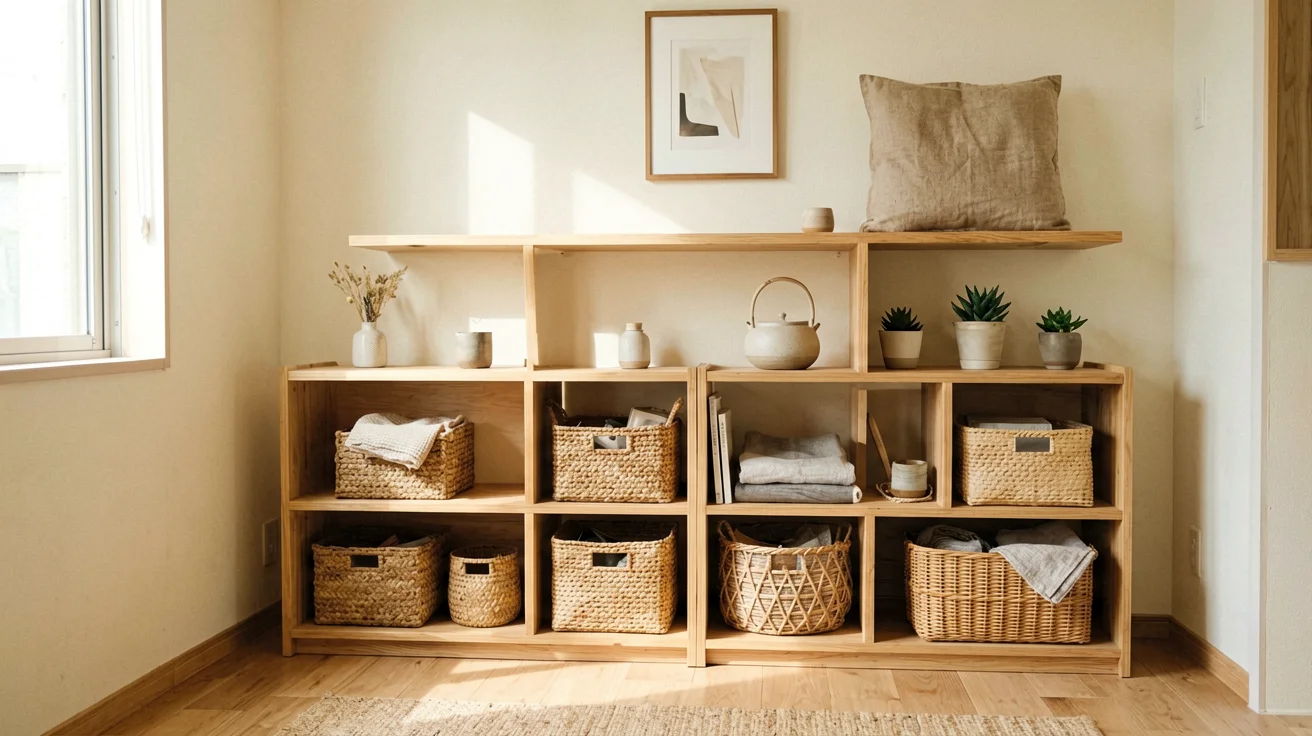
In my years as an interior designer working with small apartments, I've seen two extremes: spaces so minimalist they feel sterile, and spaces so packed with storage they feel suffocating. The Japandi style — which blends Japanese wabi-sabi restraint with Scandinavian hygge warmth — offers a third path. And in 2026, it's evolving into something even more livable.
When I redesigned my own 35㎡ studio last year, I stopped chasing the Instagram-perfect white box and started asking: what if my storage could feel calm instead of clinical? That question led me deep into Japandi storage principles, and the results surprised even me.
What Is Japandi Storage?
Japandi isn't just a color palette or a decorating trend — it's a philosophy of intentional living. For storage, it means choosing fewer, better pieces that serve double duty: organizing your belongings while contributing to the room's sense of calm.
The 2026 evolution (sometimes called Japandi 2.0) moves away from stark minimalism toward what I call "relaxed warmth." Think natural wood instead of white laminate, woven textures instead of clear plastic, and concealed storage that doesn't scream "I'm hiding clutter."
Rule 1: Choose Natural Materials Over Plastic
The quickest way to make storage feel peaceful? Swap plastic bins for materials that age gracefully. Bamboo shelves, cotton canvas bins, and rattan baskets all do double duty — they organize your stuff and add warmth to the room.
In my studio, I replaced a row of clear plastic containers with a set of seagrass baskets on a bamboo shelf. Same storage capacity, completely different energy in the room. The baskets hide visual noise while the bamboo warms up the wall.
I found these woven storage baskets for around $25 each, and they've held up beautifully for a year.
Rule 2: Vertical Storage with Warm Wood Tone
Wall storage is non-negotiable in a small apartment, but metal shelving units can feel industrial and cold. Japandi storage favors warm wood — floating shelves in light oak or ash, wall-mounted cabinets with visible grain, and pegboards in natural finishes.
The key is consistency. Pick one wood tone and repeat it across all your wall storage. In a 40㎡ space, mixing walnut shelving with birch cabinets creates visual chaos. I chose a pale ash tone for everything — shelves, hooks, even the mirror frame — and the room instantly felt larger and more cohesive.
For renters who can't drill, there are solid wood wall shelves with adhesive mounting systems that hold up to 15 lbs.
Rule 3: Conceal with Textiles, Display with Intention
Japandi storage follows a simple split: 70% concealed, 30% displayed. The items you see should be beautiful or meaningful — a ceramic vase, a stack of design books, a wooden tray. Everything else goes behind doors, inside baskets, or under fabric covers.
I use linen curtain panels to hide the open shelving in my kitchen area. It softens the room and costs under $20 per panel. When everything is visible, your eye has nowhere to rest, and the space feels smaller.
For the items you do display, use a single tray or tray-like surface as a boundary. This "framing" technique is straight out of Japanese display philosophy — it turns clutter into a curated vignette.
Rule 4: One In, One Out — The Japanese Purge Habit
This might be the most powerful rule, and it has nothing to do with buying storage products. The Japanese practice of dan-sha-ri (断捨離) teaches that before you add storage, you should subtract items.
Here's my system: every time I bring something new into my apartment, I remove one item of similar size. New jacket? Old one gets donated. New kitchen gadget? One goes. This habit keeps my storage needs constant, which means my Japandi system never gets overwhelmed.
I keep a small donation basket by the door — it's a $12 wire basket that makes the process frictionless.
Rule 5: Soft Lighting Makes Storage Feel Like Home
Harsh overhead lighting turns even the best storage into a warehouse. Japandi spaces use layered, warm lighting (2700K–3000K) to make storage feel integrated rather than imposed.
In my apartment, I installed a simple LED strip under my top shelf. It casts a warm glow on the items below and turns a basic shelf into a feature wall. The strip was $15 and took 10 minutes to stick in place.
If you can't add lighting, position your key storage near a window. Natural light softens the hard edges of shelves and bins, and the shadow play throughout the day adds life to the space.
Conclusion
Japandi storage isn't about buying more — it's about choosing better. Natural materials, consistent wood tones, the 70/30 conceal rule, the one-in-one-out habit, and warm lighting. Five rules that turned my 35㎡ studio from a storage war zone into a calm, functional home.
If you're starting your own Japandi storage journey, begin with Rule 4 — subtract before you add. Then check out our small apartment wall storage guide for more vertical storage ideas, or explore our soft minimalism guide for a related approach.
Related Articles
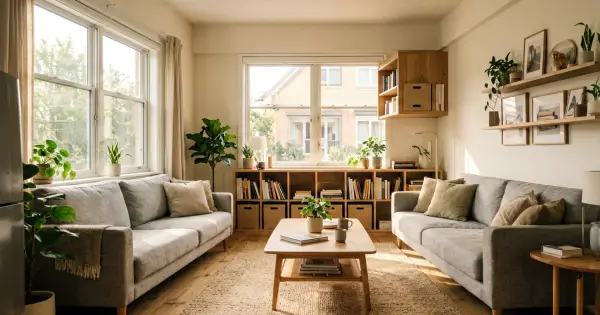
The 80/20 Storage Rule: How to Apply the 'Hide 80%, Show 20%' Philosophy in Your Small Apartment
The 80/20 storage rule is 2026's hottest home organization philosophy. Learn how to hide 80% of your belongings and display 20% to make your small apartment feel spacious, tidy, and effortlessly stylish.
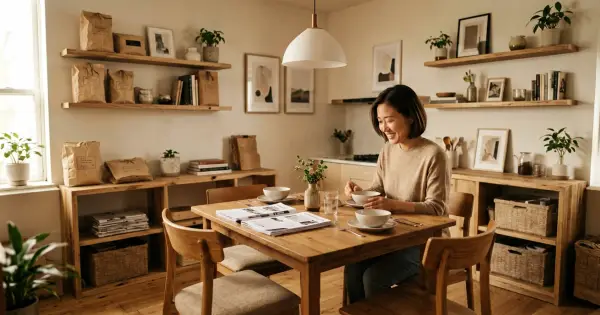
Small Dining Room Storage: 10 Solutions for Your Apartment
Your small dining table is buried under mail, groceries, and clutter. Discover 10 smart storage solutions for small dining rooms — from wall shelves to multi-functional furniture.
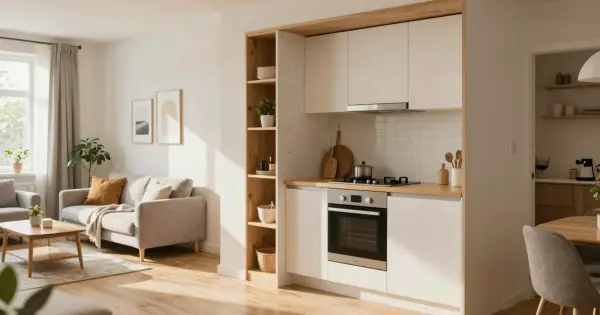
Zero-Counter Kitchen: Minimalist Storage for 3sqm Kitchens
A former interior designer's guide to clearing every inch of counter space in a 3sqm rental kitchen, with vertical storage hacks, wall-mounted solutions, and a room-by-room zone plan.
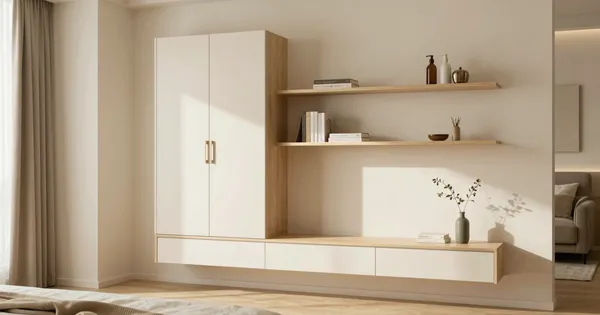
Floating Furniture Guide: Make Small Spaces Feel 30% Larger
Discover how floating furniture can make your small apartment feel 30% larger. Our 2026 guide covers wall-mounted cabinets, floating desks, and design tips for airy, spacious living.
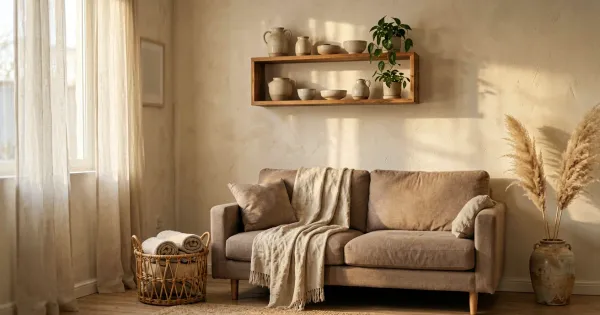
Soft Minimalism Storage: 2026 Warm Small Apartment Solutions
Embrace soft minimalism in your small apartment with our 2026 guide. Learn warm storage solutions, cozy organization tips, and create a home that feels spacious and lived-in.
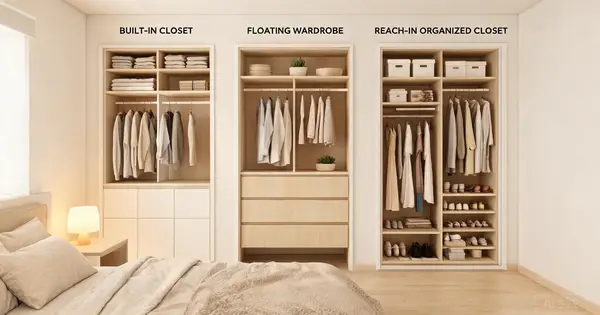
9 Closet Designs Compared: Best for Small Spaces 2026
From floor-to-ceiling built-ins to floating wardrobes — compare 9 small closet designs for 2026. Find the perfect space-saving solution for your apartment.