9 Closet Designs Compared: Best for Small Spaces 2026
From floor-to-ceiling built-ins to floating wardrobes — compare 9 small closet designs for 2026. Find the perfect space-saving solution for your apartment.
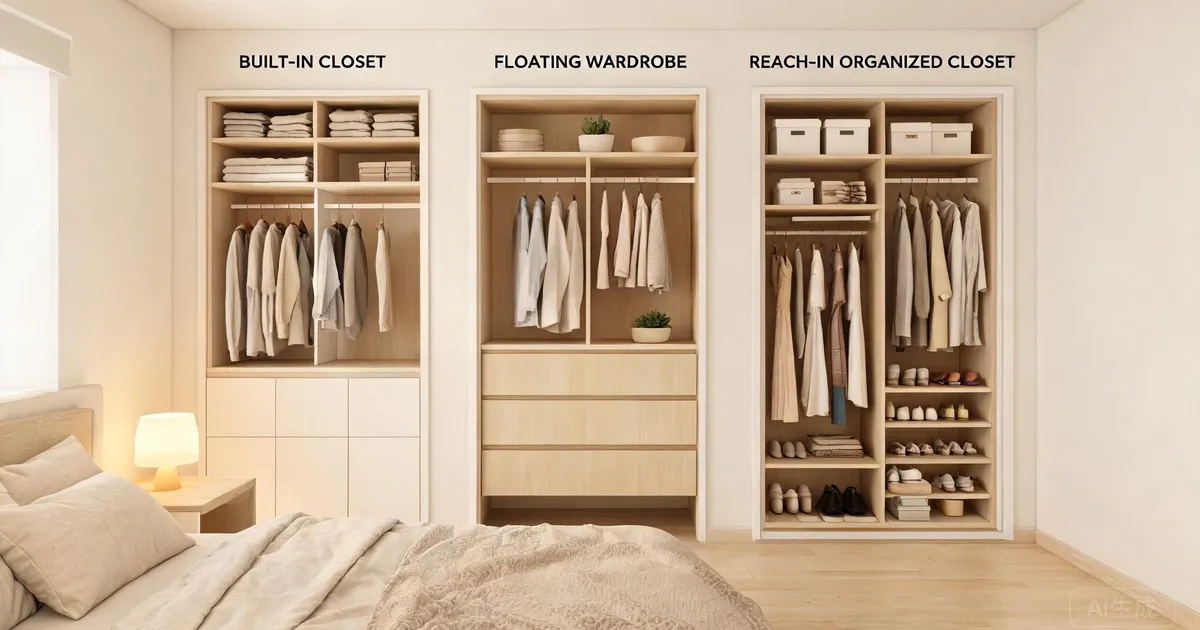
When I was working as an interior designer, the most common complaint I heard from clients was, "My closet is too small." And honestly, even in larger apartments, closets somehow never feel big enough. But in a small apartment — where every square foot counts — choosing the right small closet design ideas 2026 can make the difference between a chaotic bedroom and a peaceful one.
After eight years of designing spaces for apartments ranging from 300 sq ft studios to 700 sq ft two-bedrooms, I've seen nearly every closet configuration out there. Some worked brilliantly. Others... well, let's just say they taught me what not to do. In this article, I'm comparing nine popular closet designs, breaking down their pros and cons, and helping you figure out which one fits your space, budget, and lifestyle.
The 9 Closet Designs at a Glance
Before we dive into the details, here's a quick overview of how each design stacks up across the key dimensions that matter for small apartments.
| Design | Price Range | Storage Capacity | Space Efficiency | Rental Friendly | Installation | Best For |
|---|---|---|---|---|---|---|
| Floor-to-Ceiling Built-In | $800-$3,000 | ⭐⭐⭐⭐⭐ | ⭐⭐⭐⭐⭐ | No | Professional | Maximum storage, permanent homes |
| L-Shaped Corner | $600-$2,500 | ⭐⭐⭐⭐⭐ | ⭐⭐⭐⭐ | No | Professional | Awkward corner spaces |
| Floating Wardrobe | $400-$1,500 | ⭐⭐⭐⭐ | ⭐⭐⭐⭐⭐ | Depends | Moderate | Small bedrooms, visual lightness |
| Open Wardrobe System | $200-$800 | ⭐⭐⭐ | ⭐⭐⭐⭐ | Yes | Easy | Renters, budget-conscious |
| Modular Wardrobe | $300-$1,200 | ⭐⭐⭐⭐ | ⭐⭐⭐⭐ | Yes | Easy | Growing wardrobes, flexibility |
| Sliding Door Wardrobe | $500-$2,000 | ⭐⭐⭐⭐ | ⭐⭐⭐⭐ | No | Moderate | Tight spaces, narrow rooms |
| Curtain Wardrobe | $50-$200 | ⭐⭐⭐ | ⭐⭐⭐⭐ | Yes | Very Easy | Budget renters, temporary solutions |
| Freestanding Wardrobe | $150-$800 | ⭐⭐⭐ | ⭐⭐⭐ | Yes | Easy | Quick setup, any rental |
| Loft Bed Integrated | $800-$2,500 | ⭐⭐⭐⭐ | ⭐⭐⭐⭐⭐ | No | Professional | Micro-apartments, studios |
Built-In and Semi-Built-In Solutions
Floor-to-Ceiling Built-In Wardrobe
If you own your apartment or plan to stay in a rental long-term, a floor-to-ceiling built-in wardrobe is the gold standard. It uses every inch of vertical space — from the floor right up to the ceiling — and can be customized with exactly the combination of hanging rods, shelves, and drawers you need.
I installed one of these in a client's 400 sq ft studio last year, and we managed to fit a full season's wardrobe for two people in a closet that was only six feet wide. The key was designing the interior layout first — mapping out how many pairs of pants, folded sweaters, and hanging dresses she owned before deciding on shelf heights and rod positions.
The one downside? It's permanent. You'll need a carpenter or a good IKEA PAX hack, and you won't be taking it with you when you move.
L-Shaped Corner Wardrobe
Corners in small bedrooms are almost always wasted space. An L-shaped corner wardrobe turns that dead zone into a storage powerhouse. By wrapping around two walls, it creates a walk-in-like experience without actually needing a walk-in closet.
The trick with L-shaped wardrobes is getting the corner access right. I recommend using a carousel corner unit or pull-out hanging rods so you don't lose items in the deep corner. A client I worked with in a 50 sq ft bedroom used an L-shaped design to store her entire wardrobe plus luggage, and it only took up one corner of the room.
Floating and Open Systems
Floating Wardrobe
A floating wardrobe — mounted on the wall with a gap between the bottom and the floor — is one of my favorite best closet design for small apartment tricks. The gap underneath creates the illusion that the wardrobe is lighter and less bulky, which makes the whole bedroom feel larger.
In a 30 sq ft bedroom I redesigned for a client in Brooklyn, switching from a bulky freestanding wardrobe to a custom floating design instantly made the room feel twice as spacious. We added LED strip lighting underneath for a warm glow effect, and it became the focal point of the room.
The catch: floating wardrobes need to be mounted onto studs or solid walls, which can be tricky in some rental situations.
Open Wardrobe System
The open wardrobe — also known as a "rack and rod" system — is the ultimate rental-friendly solution. No doors, no cabinet boxes, just a hanging rail, some shelves, and possibly a few bins. It's the closet equivalent of a capsule wardrobe: everything you own is visible, which forces you to stay organized.
I've used this setup in three different apartments myself, and it works beautifully for people who own fewer than 50 items of clothing. The key is matching hangers — I'm a big fan of the slim velvet kind — and using uniform bins for folded items. Otherwise, visual clutter builds up fast.
Flexible and Modular Options
Modular Wardrobe
Modular wardrobes like IKEA's PLATSA or ELVARLI systems let you build exactly what you need and reconfigure it later. These are perfect for people whose wardrobe needs might change — maybe you're planning to add more clothes, or you might move and want to reuse the components in a different configuration.
The biggest advantage? You can start small and expand. A base unit with a hanging rod and two shelves costs around $200, and you can add drawers, shoe racks, and extra shelving as your budget allows.
Sliding Door Wardrobe
For bedrooms where every inch of floor space matters, a sliding door wardrobe eliminates the clearance needed for hinged doors. You need at least 24 inches of clearance for a standard door swing — sliding doors need zero.
The trade-off is that you can only access one section at a time. If you're the type who likes to see everything at once while getting dressed, this might feel limiting. But for narrow rooms where a swinging door would block the bed or dresser, it's a practical lifesaver.
Curtain Wardrobe
Never underestimate the power of a curtain rod and a piece of fabric. A curtain wardrobe is exactly what it sounds like: a hanging rod mounted between two walls (or inside an alcove) with a curtain pulled across. It's the cheapest closet solution on this list — under $50 for basic supplies — and it looks surprisingly good with the right fabric.
I used this in my first 30 sq ft studio, and it was honestly one of the best decisions I made. A simple linen curtain from IKEA, a tension rod, and a few shelves created a closet that looked intentional and elegant. The best part? When I moved out, everything came down in ten minutes with zero damage.
Freestanding and Multi-Functional
Freestanding Wardrobe
The classic standalone wardrobe — the kind you buy at a furniture store, assemble at home, and take with you when you move — is still a solid option. It's not as space-efficient as a built-in, but it wins on convenience and portability.
For small apartments, look for designs with tall, narrow proportions rather than wide, short ones. A tall wardrobe (72+ inches) uses vertical space more efficiently and leaves room for a dresser or nightstand beside it.
Loft Bed Integrated Wardrobe
This is the ultimate space-saving hack for micro-apartments and studios. A loft bed with built-in wardrobe storage underneath combines two furniture functions into one footprint. You sleep on top, and your clothes live below.
I designed one of these for a client's 200 sq ft micro-studio in Manhattan. We built a custom loft bed with a full-height wardrobe and a small desk area underneath. The vertical storage freed up the entire floor, making the space feel like a proper one-bedroom instead of a cramped studio.
Top 3 Picks: Pros and Cons
After comparing all nine designs, here are my top three recommendations for small apartments, each suited to a different situation.
| Design | Pros | Cons |
|---|---|---|
| Floor-to-Ceiling Built-In | Maximum storage capacity, fully customizable, uses every inch of vertical space, increases property value, seamless look | High cost ($800-$3,000), permanent installation, requires professional carpenter, not suitable for renters |
| Floating Wardrobe | Creates visual spaciousness, easy to clean underneath, modern aesthetic, great for small bedrooms | Requires wall mounting, limited weight capacity for heavy items, may need drywall anchors, not ideal for very heavy clothing |
| Curtain Wardrobe | Extremely affordable ($50-$200), zero damage installation, can look stylish with right fabric, easy to change design | No dust protection, requires visual discipline, limited hanging space, not suitable for humidity-prone areas |
Choosing the Right Closet for Your Space
So which one should you pick? Here's my quick rule of thumb:
- If you own your home and want maximum storage: go with the floor-to-ceiling built-in.
- If you're renting but want something that looks polished: try the floating wardrobe or open wardrobe system.
- If you're on a tight budget ($200 or less): the curtain wardrobe is genuinely impressive for the price.
- If you live in a micro-studio (under 300 sq ft): the loft bed integrated wardrobe will change your life.
For most people, though, the best solution combines elements of different designs. I often recommend starting with a simple open system and gradually adding components as you figure out what works for your specific wardrobe and daily routine.
Remember, the most expensive or elaborate closet design isn't necessarily the best one. The best closet is the one that fits your space, works with your lifestyle, and — most importantly — makes you feel good every time you open it. Whether you're DIY-ing a curtain rod or hiring a carpenter for a full built-in, the goal is the same: a space that makes getting dressed feel effortless.
Start by measuring your bedroom and taking inventory of your clothes. That simple step will tell you more about what kind of closet design you need than any article can.
Related Articles
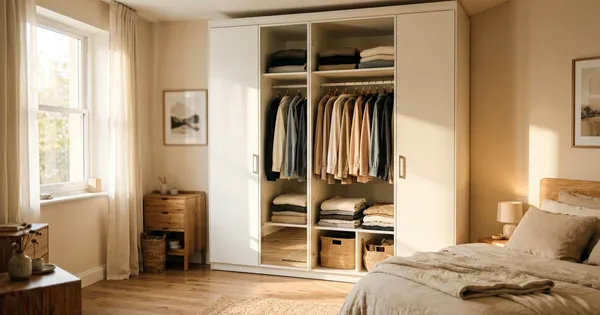
Small Closet Design Guide 2026: 9 Practical Ideas to Maximize Every Square Inch
Discover 9 smart small closet design ideas for 2026 — from floor-to-ceiling built-ins to floating wardrobes and corner solutions that maximize your storage space.
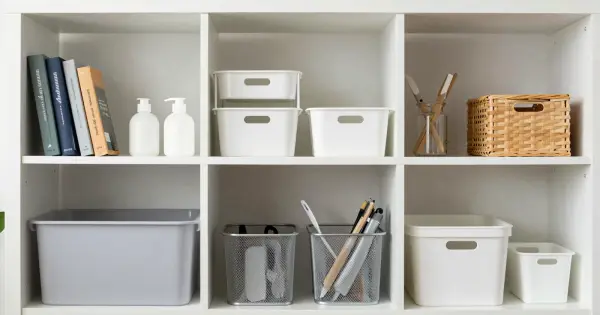
Modular Furniture 2026 Review: 3 Top Systems Compared
Three modular furniture systems tested in a 30sqm studio for six months. Side-by-side specs, real pros and cons, and which one is worth your money in 2026.
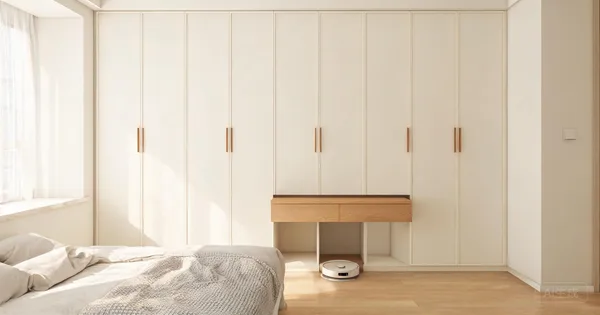
Low-Maintenance Storage: 5 Designs for a Cleaner Small Apartment
Storage should save space AND save your time. Explore 5 low-maintenance storage designs that keep your small apartment cleaner with less daily effort.
Multi-Purpose Balcony: Laundry, Cleaning, Pets & Plants in One
Your balcony can be more than a drying rack. Design one zone that holds a washer-dryer, cleaning tools, pet supplies, and plants without them fighting.
The 80/20 Storage Rule: How to Apply the 'Hide 80%, Show 20%' Philosophy in Your Small Apartment
The 80/20 storage rule is 2026's hottest home organization philosophy. Learn how to hide 80% of your belongings and display 20% to make your small apartment feel spacious, tidy, and effortlessly stylish.

Small Dining Room Storage: 10 Solutions for Your Apartment
Your small dining table is buried under mail, groceries, and clutter. Discover 10 smart storage solutions for small dining rooms — from wall shelves to multi-functional furniture.