Zero-Counter Kitchen: Minimalist Storage for 3sqm Kitchens
A former interior designer's guide to clearing every inch of counter space in a 3sqm rental kitchen, with vertical storage hacks, wall-mounted solutions, and a room-by-room zone plan.
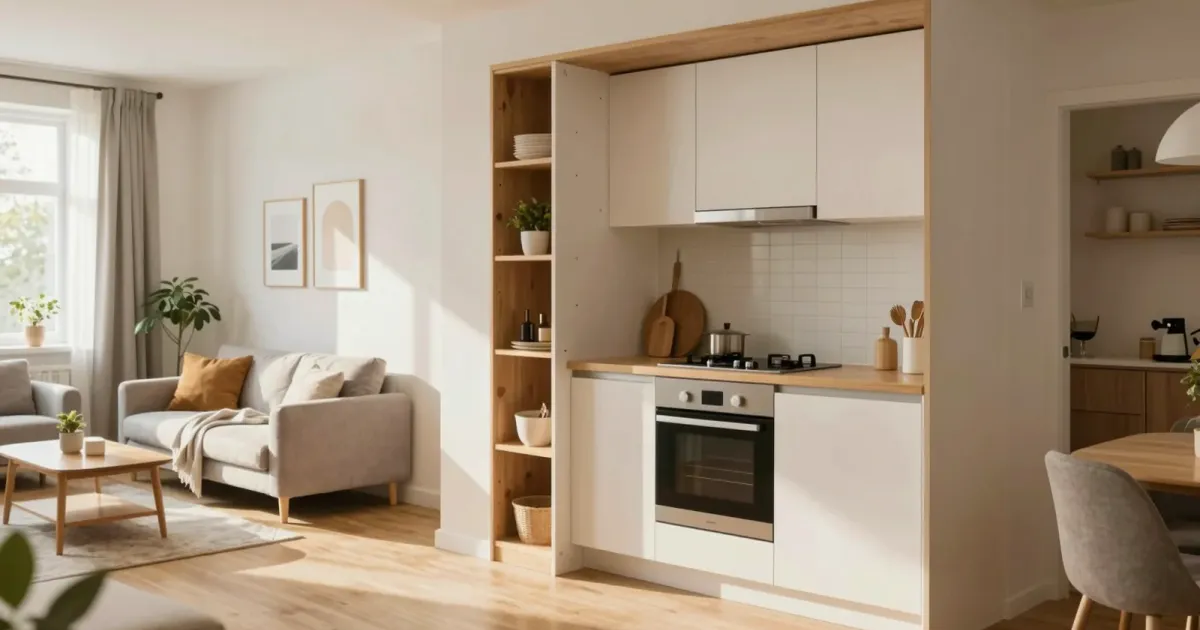
Picture this: it's 7 AM, you're trying to make toast, and there's literally nowhere to set the bread down. Your knife block hogs the left corner, a dish rack dominates the right, and the microwave has claimed the only stretch of free space. I've been there. In my previous renovation of a 30sqm studio, the kitchen was exactly 3sqm—basically a closet with a sink. Achieving a zero counter kitchen felt impossible until I stopped trying to fit more stuff and started thinking vertically.
After eight years as an interior designer specializing in small-apartment space planning, I can tell you this: a clear countertop isn't a luxury reserved for spacious kitchens. It's a system anyone can build. The zero counter kitchen method is about relocating every single item off your work surface and into a designated home—on walls, inside cabinets, or on the back of doors. Once you experience the calm of a bare counter, you'll never go back.
Why Your Counter Is Always Cluttered
Let's be honest about what's really happening. Your counter isn't messy because you're disorganized—it's cluttered because your kitchen was designed for someone who cooks with three pots and owns nothing. Rental kitchens in particular come with shallow cabinets, zero wall storage, and a single strip of workspace that doubles as a dumping zone.
In the 3sqm kitchen I redesigned, the original layout had one upper cabinet and one drawer. That's it. Everything else—spices, utensils, cutting boards—ended up on the counter by default. When there's no designated home for an item, the counter becomes its home. The key to a zero counter kitchen is simple: give every single thing a place that isn't the countertop.
Another culprit is the "just for now" habit. You set the kettle down just for now. The fruit bowl is just for now. The dish soap is just for now. But "just for now" becomes permanent. Breaking this cycle means removing the option entirely—wall-mount the soap, store the kettle inside a cabinet, and skip the fruit bowl altogether.
The Zero-Counter Framework: 3 Zones
Here's the method that changed everything for me. Divide your tiny kitchen into three functional zones, each with its own storage logic. The zero counter kitchen thrives on this clarity.
Prep Zone (the area between sink and stove): This is sacred ground. Nothing lives here permanently—not even a spoon rest. All prep live in a drawer or on the wall within arm's reach but off the surface. When you need to chop, the entire zone is available.
Cooking Zone (around the stove and vent): Only the stove and its immediate wall storage belong here. A magnetic knife strip replaces the block. A wall-mounted spice rack replaces the row of jars. The key is utilizing vertical space right where you cook, so everything you need is at eye level without touching the counter.
Storage Zone (cabinets, walls, and doors): This is where everything else goes. Inside upper cabinets, on pegboards, behind doors, and under the sink. If an item doesn't belong to prep or cooking, it lives in the storage zone. This zone is where most of your reorganization effort goes—and where the biggest gains come from.
Go Vertical: Wall Storage That Actually Works
The biggest revelation in my design practice? Most small kitchens have at least one blank wall doing absolutely nothing. That wall is your best friend. Going vertical is the single most effective zero counter kitchen strategy.
Magnetic knife strips changed my life. A good magnetic strip holds knives securely, looks sleek, and completely eliminates the bulky knife block. I mounted mine to the right of my stove—every blade within reach, zero counter footprint. Look for one with a stainless steel finish and strong magnets that hold even your heaviest chef's knife.
Pegboard systems are another vertical powerhouse. A pegboard above your prep or cooking zone can hold spatulas, ladles, scissors, measuring cups, and even small pots. The beauty is flexibility—you can rearrange hooks and shelves as your needs change. I installed a 24×36 inch pegboard in a client's kitchen and moved twelve items off her counter in one afternoon.
Wall-mounted spice racks free up both cabinet and counter space. A tiered rack next to your stove means you grab cumin without opening a door or moving the olive oil. The secret to visually making a space feel larger is keeping surfaces clear and drawing the eye upward to organized vertical storage instead.
Inside the Cabinets: Drawer and Shelf Optimization
Vertical space inside cabinets matters just as much as wall space. Most rental cabinets come with fixed shelves spaced too far apart, wasting inches that could hold twice as much.
Adjustable drawer dividers turn a chaotic utensil drawer into a precise grid. Every tool has its slot, and nothing migrates to the counter because it "doesn't fit anywhere." I divide my cooking drawer into four sections: spatulas and spoons, knives and peelers, measuring , and miscellaneous. Opening a well-organized drawer is deeply satisfying.
Under-sink organizers are the unsung heroes of the zero counter kitchen. That awkward cabinet beneath the sink typically becomes a disaster zone of cleaning bottles and sponges. A tiered shelf with a pull-out design works around the plumbing and gives you two levels of storage instead of one. Suddenly your dish soap, sponges, and trash bags all have a proper home.
Tension rod shelving is the rental-friendly hack that keeps giving. A tension rod with a hanging basket fits inside any cabinet or between walls—no drilling required. I use one between my upper cabinets to hold sponges and scrub brushes, keeping them off the counter entirely.
For corner cabinets, add a lazy Susan or pull-out caddy. For deep lower cabinets, install sliding drawers so nothing gets lost in the back. The goal is simple: if you can see it and reach it, it won't end up on the counter.
The 5 Items I Removed from My Counter Forever
This is the part where most guides say "just declutter"—but I'll be specific. These five items are the most common counter hogs, and each one has a better home.
The knife block. Gone. Replaced by a magnetic strip on the wall. Freed up an entire corner of counter space.
The dish drying rack. Replaced with an over-sink rack that sits above the sink. Same function, zero counter footprint. Dishes drain directly into the basin.
The appliance garage. If you use your rice cooker or toaster daily, create a dedicated shelf inside a cabinet where it lives permanently. If you use it weekly, store it and take it out only when needed. No appliance deserves counter real estate 24/7.
The soap and sponge caddy. Wall-mount a soap dispenser and hang a sponge holder inside the sink or on the inside of the cabinet door. These small items eat more visual space than you'd think.
The fruit bowl and snack basket. I know, it looks nice on Instagram. But in a 3sqm kitchen, a bowl of bananas takes up precious prep space. Store produce in the fridge or in a hanging basket mounted under a cabinet. The counter stays clear, and your bananas stop getting bruised.
A zero counter kitchen isn't about owning less—it's about storing smarter. When every tool has a vertical home, every cabinet is optimized, and every surface stays clear, even the tiniest kitchen feels spacious. Start with one zone today. Mount that magnetic strip. Clear one corner. The feeling of a bare countertop is addictive, and once you start, you won't want to stop.
Related Articles

The 80/20 Storage Rule: How to Apply the 'Hide 80%, Show 20%' Philosophy in Your Small Apartment
The 80/20 storage rule is 2026's hottest home organization philosophy. Learn how to hide 80% of your belongings and display 20% to make your small apartment feel spacious, tidy, and effortlessly stylish.
Small Dining Room Storage: 10 Solutions for Your Apartment
Your small dining table is buried under mail, groceries, and clutter. Discover 10 smart storage solutions for small dining rooms — from wall shelves to multi-functional furniture.
Kitchen Narrow Gap Storage Guide: Maximize Every Inch Under 15cm
Struggling with dead space in your small kitchen? This guide shows you how to turn narrow gaps under 15cm into functional storage with pull-out racks, spice organizers, and slim cabinets.
5 Kitchen Reno Scams I Fell For: 2026 Renter's Guide
Five kitchen design trends that wrecked my 30sqm rental. What I installed, what failed, and the budget swaps I use in 2026.
Japandi Storage: Calm Organization for Tiny Apartments
Discover how Japandi style brings calm, functional storage to small apartments. Five practical rules blending Japanese minimalism with Scandinavian warmth.

Soft Minimalism Storage: 2026 Warm Small Apartment Solutions
Embrace soft minimalism in your small apartment with our 2026 guide. Learn warm storage solutions, cozy organization tips, and create a home that feels spacious and lived-in.