Developer's Cure-All Bag: Organizing Commuter Bags, Travel
Developers carry a lot of stuff in their daily bag—laptops, chargers, earbuds, pens, tissues, all over the place. This post shares commuter bag...
Every morning, the last five minutes before walking out the door, I do the same thing—dig through my bag.
Where's my badge? I definitely put it in the bag yesterday. Where are my earbuds? Did I leave them at the office? Where's my charger? Why do I have the cable but not the plug? After this happened way too many times, I finally had to admit it: my bag is a black hole.
My commuter bag is a regular backpack I've used for three years. Inside: a MacBook Pro, a charger, a power bank, two pairs of earbuds (wired and wireless), a wallet, keys, work badge, tissues, wet wipes, an umbrella, a half-finished bottle of water, a few pens, a notebook, and occasionally a half-eaten breakfast bun—naturally, in a plastic bag.
Having a lot of stuff isn't the problem—the problem is not being able to find any of it. Every time I look for something, I have to turn the whole bag upside down. Sometimes what I'm looking for is right at the bottom, but I miss it three times in a row. This experience is as frustrating as debugging a production issue.
Minimalist EDC: What You Really Need to Carry Every Day
EDC (Every Day Carry) is a popular concept in the dev community. But I've seen a lot of people's EDC lists get absurdly long—basically strapping your entire life to your back.
My original EDC list had 20+ items. Then I did something simple: dumped everything out of my bag and sorted it by usage frequency. The result was humbling—80% of the items, I used less than once a week.
My daily EDC is now down to:
Core layer (must-have, can't work without them): MacBook, charger, work badge, keys.
Common layer (likely to use every day): Phone (obviously in my pocket), wireless earbuds, tissues.
Backup layer (just in case): Power bank, umbrella (depending on the weather forecast).
Everything else? It stays at the office, stays at home, or just doesn't come with me. Like that pen "in case I need to sign something"—there's one at the front desk at work, one in the meeting room, and one at every restaurant. Do I really need to carry one every day?
The notebook too. I used to carry an A5 paper notebook, telling myself I'd "jot down ideas on the go." Three months in, I'd filled three pages—one of which was a takeout phone number. Now I just use my phone's notes app. Inspiration strikes, I type it out—faster than digging for a pen in my bag.
Commuter Bag Organization
Even with fewer items, you still need organization. My bag doesn't have many internal pockets, so I use pouches to create artificial zones.
Tech zone: A medium tech pouch holds the MacBook charger, power bank, and cables. This pouch always lives next to the laptop compartment in the bag—same spot every time, so I can find it with my eyes closed.
Inside the pouch, I have a small mesh bag with two compartments: one for chargers and cables, one for the power bank. That way, opening the pouch doesn't reveal a tangled mess of wires, and I never end up with a power bank but no cable.
Stationery zone: A small pouch for pens, USB drives, and SD cards. Honestly, this pouch gets less and less use, because I've digitized most things. But it stays—just in case.
Daily zone: The outer pocket of the bag holds tissues, wet wipes, and masks. These are things you need "right now" in a hurry, so they go in the easiest-to-reach spot. Another plus of the outer pocket: wipes and tissues don't get the rest of the bag dirty.
Umbrella: Lives in the side pocket, separate from everything else. A wet umbrella in the main compartment is a disaster. I bought an ultra-light quick-dry umbrella—give it a couple of shakes and it's dry. If all else fails, I just stick it in a plastic bag.
Food and water: My current rule: don't bring them. I buy breakfast downstairs from the office, fill up water at work. No food in the bag means no weird smells, no bugs, no leaks. Since I started following this rule, the hygiene in my bag has improved dramatically.
Packing List for Business Trips
For developers, the most common business trips are 3-5 days for tech conferences or on-site client work. I used to pack randomly for trips, and the result was always the same—either I overpacked (suitcase overweight) or I underpacked (got to the hotel and realized I forgot my razor).
Now I have a fixed packing list, sorted by trip length.
3-day short trip:
A carry-on suitcase + a backpack. The suitcase holds a change of clothes (3 sets of underwear, 2 t-shirts, 1 pair of pants, 1 jacket), a toiletry bag, and a pair of backup shoes. The backpack holds the laptop, charger, earbuds, and ID.
5-day medium trip:
On top of the 3-day list, add a button-down shirt and an extra pair of pants, plus a portable steamer (I don't trust the hotel's irons). For southern destinations, swap the jacket for a lighter one. For northern destinations, add a sweater.
7+ day long trip:
Plan to do laundry on-site, or bring 7 sets of underwear and reuse outerwear and pants. For long trips, I bring a foldable laundry bag to separate clean and dirty clothes.
The list lives in my phone's notes app, and I check it off before every trip. I've iterated on it a dozen times now, and it's rock solid.
Recommended Storage Tools
I've tried a lot of organizing tools. Here are a few that really deliver.
Tech pouch: I got mine for about $5 on an online marketplace—three-layer design with mesh and elastic bands. Two years in, the zipper still works, the fabric hasn't worn through, and the value is unbeatable. The key is to get the "standing" version—you can place it upright in the bag instead of laying it flat, which saves space.
Compression bags for clothes: A business trip lifesaver. Roll your clothes and stuff them in a compression bag—you cut the volume in half. I have a set of three: large for outerwear, medium for t-shirts and pants, small for underwear. At the hotel, I just pull out the whole bag—no more picking through the suitcase one item at a time.
Toiletry bag: Get one with a hook—hang it on the towel rack at the hotel instead of leaving it on the counter. It should have a waterproof section for toothbrush and razor, so wet stuff doesn't leak.
Bag dividers: If your bag has a lot of internal space but no compartments, get an adjustable divider panel that slides in. I added one to my backpack—it's basically like having a new bag.
The Weekly Backpack Cleaning Habit
Even the best organization falls apart without maintenance. Every Friday before leaving work, I spend 5 minutes cleaning out my bag.
The steps are simple: take everything out, put each item back where it belongs. Check for "intruders"—receipts I don't know how ended up in there, candy wrappers, used masks. These are the cancer of a bag—if you don't clean them out, they spread.
Then check the consumables: how many tissues are left? How much charge is in the power bank? Are the wet wipes dried out? Restock what needs restocking, throw out what needs to go.
Five minutes is short, but it puts your bag back into "factory-fresh" state for Monday morning. That little bit of ritual does wonders for kicking off a new week—at least way better than digging for your work badge at 8:55 a.m.
Wrapping Up
Organizing your bag sounds trivial, but for someone like me who's been fighting with my bag every morning, it's a big part of quality of life.
My bag's weight dropped from 4kg to 2.5kg. My shoulders feel lighter, I find things faster, and I'm not anxious about business trips anymore. Best of all, I can finally use those last five minutes in the morning to calmly take a sip of water, instead of frantically digging through my bag in a cold sweat.
If you're struggling with "my bag is a black hole" syndrome, try this: empty it out this weekend and re-curate based on usage frequency. You'll find that a lot of things you don't actually need to carry every day. Lighten the load—it starts with the bag.
Related Articles
A Developer's Coffee/Tea Setup: How Build Desk Drink Station
Developers run on coffee, and with all the gear and tea varieties, things can get messy fast. This post covers how to build a desk drink station—from a...
Developer's Toolbox Organization: DIY Repair Tool Storage
Developers love to tinker, and homes are full of repair tools, but the one you need is never around. This post shares a tool categorization system, toolbox...
Developer's Guide Souvenirs Sentimental Clutter: Storage
Developers think logically, but sentimental items—gifts, photos, travel mementos—often stump them. This post shares a souvenir categorization method, digital...
Fridge Organization Hacks: Developer's Quick-Prep Food
A developer's fridge is often a black box—stuff goes in and gets forgotten, until one day you smell something funky and remember to clean. This post shares a...
Developer's Suitcase Organization: Minimalist Approach
Developers travel often, but packing efficiency is usually low — you either bring too much or too little. This article shares packing list templates...
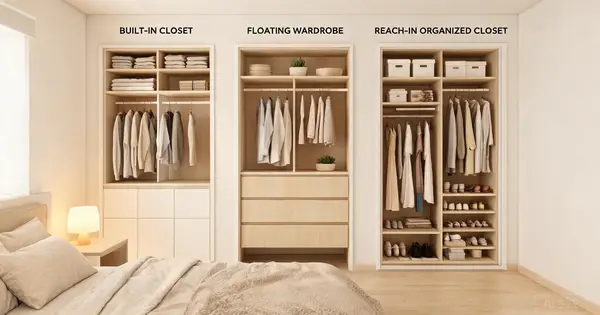
9 Closet Designs Compared: Best for Small Spaces 2026
From floor-to-ceiling built-ins to floating wardrobes — compare 9 small closet designs for 2026. Find the perfect space-saving solution for your apartment.