Shared Living Storage Guide: Complete Belongings Organizing
After a year of sharing a 650 sq ft two-bedroom with my girlfriend, I went from a disorganized mess to a "space management expert." Here's our complete...
Last summer, my girlfriend and I moved out of our separate studios into a 650 sq ft two-bedroom apartment. Before the move, I figured doubling our space would make organization a breeze. But the first week brought all-out "war"—her 30+ pairs of shoes took over the entire shoe rack, and my mechanical keyboard and monitor stand had nowhere to go; her skincare products filled the bathroom medicine cabinet, and my razor ended up perched on the windowsill.
That's when it hit me: sharing an apartment isn't just "space x2"—you need a whole new system for managing belongings and dividing up space. After a year of trial and error, we finally figured out a setup that works for a programmer couple. Today I want to share all the lessons we learned—and the mistakes we made along the way.
Couples Storage Conflicts: From Blissful to Bickering in One Week
The storage conflicts in the early days of cohabitation were way messier than I expected. Here are the three core conflicts we lived through:
Unclear item ownership. "Is this hairdryer yours or mine?" "Who bought this box of snacks?" When two people's stuff gets mixed together, even basic usage rights get blurry. I once accidentally used her fancy imported shampoo as my regular stuff for two weeks—let's just say things got awkward when she found out.
Space wars. Who gets how much closet space? How do we split the bookshelf? Which shelf in the fridge is whose? These questions don't have standard answers, but not figuring them out breeds resentment. We once got into a fight at 1 AM over "who left the suitcase in the middle of the living room."
Habit clashes. I'm a classic programmer—things go back where they belong after use, and the desk can't have any clutter. She's the creative type—"organized chaos," she calls it. She leaves things everywhere but always knows where they are. Neither habit is wrong, but put them together? Total disaster.
Our turning point came in month three. I got home late one night from work and found her sitting on the living room floor, surrounded by clothes, crying while sorting through them. She said: "I feel like there's no space in this home that's actually mine." That's when I realized: organization isn't just about putting things away—it's about respect and belonging.
Item Classification: Building Clear Boundaries Between Personal and Shared
The first change we made was sorting everything into three categories: personal items, shared items, and items to negotiate.
Personal Items
The definition is simple: stuff only one person uses, that the other person never needs to touch. My personal items include programming books, mechanical keyboard, gaming controller, and sports gear. Hers include cosmetics, jewelry, craft supplies, and yoga mat.
The storage rule for personal items: each person manages their own, no touching the other person's stuff. We agreed that personal items can live in shared areas (like the living room bookshelf), but they have to be neatly stored—not scattered around. My programming books go on the bottom right two shelves, her craft supplies on the top left two—we marked the shelf edges with clear label stickers (price range: $1-4, buy link) so everything's obvious at a glance.
Shared Items
Shared items include cleaning supplies, kitchenware, paper towels, laundry detergent, spare medicine, and so on. The storage rule for these: centralized storage, shared maintenance, restock when empty.
We put a 3-tier shared storage box (price range: $11-21, buy link) by the kitchen door. The top tier holds cleaning supplies, the middle holds everyday stockpiles, and the bottom holds the toolbox. There's a shared item checklist taped to the box—whoever notices something's running low checks it off, and we restock together on the weekend.
Items to Negotiate
Some things are hard to categorize—like the hairdryer (we both use it), snacks (who bought them, anyway?), and spare phone chargers. For these, we set up a "negotiation list" and spend 15 minutes at the end of each month going through it together, adjusting ownership based on actual usage.
Closet Zoning Plan: Half-and-Half Plus a Shared Zone
The closet is the most sensitive area in couples' organization, and it's where we put in the most work.
Space Allocation Rules
Our bedroom closet is a 6-foot-wide double-door unit with a hanging rod, drawers, and shelves. We split it into three zones:
- Left 45%: Her zone
- Right 45%: My zone
- Middle 10%: Shared zone (pajamas, seasonal bedding, travel stuff)
This ratio wasn't pulled out of thin air—we each counted our clothes and negotiated. She has about 1.5 times more clothes than I do, but she volunteered to only take 45% because "some of these clothes should probably go."
Closet Interior Makeover
The original shelf heights were all wrong—my shirts would wrinkle when hung up, and her long dresses would drag on the floor. We added two sets of adjustable closet dividers (price range: $8-17, buy link) to rework the hanging area into short-hang, long-hang, and pants sections.
At the bottom of the closet, we each placed a fabric drawer storage box (price range: $5-11, buy link). I use mine for underwear, socks, and t-shirts; she uses hers for underwear and accessories. Each box has its own label, so no more grabbing the wrong stuff.
Shoe Storage: From Battlefield to Peace Treaty
Shoes were our biggest flashpoint. She has 32 pairs, I have 8, but the shoe rack only has 12 slots. The final solution: upper rack for in-season daily shoes (6 slots each), lower rack for off-season shoes and slippers. Her extra shoes go in clear stackable shoe boxes (price range: $7-14 for 6, buy link), neatly stacked at the bottom of her closet. I only have two extra pairs, so they go straight into under-bed storage boxes.
Shared Space Rotating Chore System
Organization isn't just about "putting things away"—it's also about "keeping things tidy." We set up a simple rotating chore system that's worked surprisingly well for eight months now.
Chore Division
We split the shared area (living room, kitchen, bathroom) cleaning into daily and weekly tasks:
Daily tasks (rotating, one week each person):
- Wash dishes and clean the sink
- Put away any scattered items in shared areas
- Take out the trash
Weekly tasks (fixed division):
- Me: Mop floors, clean expired food from the fridge, organize the bookshelf
- Her: Wipe down counters, change bed sheets, organize the entryway
Shared Storage Tools Checklist
To keep things fair, we made a "shared storage tools checklist" that tracks all the organization supplies we bought together and what each person contributed:
| Item | Price | Buyer | Ownership |
|---|---|---|---|
| 3-tier shared storage box | $17 | Joint | Shared |
| Closet dividers | $12 | Me | Shared |
| Clear shoe boxes x6 | $11 | Her | Hers |
| Laundry hamper | $5 | Joint | Shared |
This list stopped the "why are you using my storage box?" arguments cold, and it gave us a clear picture of our shared assets.
Our Favorite Couples Organization Products
After a year, we've tried a lot of storage tools—some became absolute lifesavers, some were total wastes of money. Here are the ones we both agree are worth it:
1. Double-Person Laundry Sorter
We picked up a 3-compartment laundry sorter (price range: $11-21, buy link) with separate sections for "my clothes," "her clothes," and "hand-wash items." No more digging through piles to sort laundry, and no awkward "your sock got mixed in with my stuff" moments. The sorter has wheels, so we just roll it right next to the washing machine.
2. Bathroom Wall-Mounted Storage Shelf
Bathroom counter space is tight, so we installed a no-drill bathroom wall shelf (price range: $5-12, buy link) with three tiers: top for her skincare (she uses it most), middle for shared toiletries, bottom for my razor and face wash. Each tier has little labels—putting things back where they belong became second nature.
3. Fridge Storage Boxes with Label System
The fridge is another conflict hotspot. We use clear fridge storage containers (price range: $4-8 per set, buy link) to organize by shelf: top for shared ingredients, middle left for her snacks, middle right for my drinks, bottom for fresh ingredients waiting to be cooked. Each box has a label with contents and purchase date—no more expired food, and clear ownership of "that yogurt is mine, don't drink it."
4. Entryway Key and Mask Storage Box
We got a custom entryway wall-mounted storage box (price range: $7-14, buy link) with key hooks, a mask compartment, a coin tray, and a little whiteboard. The last thing we do before leaving each day is glance at the box—keys there? Masks enough? We also leave each other notes on the whiteboard, like "remember to pay the electric bill" or "hot pot tonight."
Communication Tips to Avoid Storage Arguments
Even the best organization system falls apart without communication. Here are five principles we figured out:
1. Use data, not emotional blame.
Don't say "you're always leaving stuff everywhere." Instead, try: "I noticed your bag and jacket were in the living room three times this week—can we find a fixed spot for them?" Specific numbers and facts are way easier to take than vague accusations.
2. Have regular "organization meetings."
On the last Sunday of every month, we spend 20 minutes in a "home organization meeting." We review how the month went, talk about problems that came up, and adjust next month's plan. This little ritual turned organization from "a conflict waiting to blow up" into "a project we can talk about rationally."
3. Respect each other's habits, find middle ground.
She likes leaving the book she's reading on the couch. I think it looks messy. The compromise: a small fabric storage basket (price range: $3-7, buy link) on the couch where her "currently reading" stuff can live—satisfies her habit while keeping things looking tidy.
4. Give each other a "clutter corner."
We agreed that each person's bedroom can have one "no-organize zone"—my desk drawer, her vanity corner. The other person doesn't get to comment on or touch that area. Having this little escape valve actually makes us both more willing to keep the rest of the place tidy.
5. Use "we" instead of "you" and "me."
"Our home needs some organizing" sounds way better than "you need to organize your stuff." Small language shifts can really cut down on the confrontational vibe in conversations.
One Year Later
Looking back, the challenge of organizing for two people was really just a deep relationship workout. We learned to negotiate, compromise, and respect our differences—and we built a lifestyle system that's uniquely ours.
Our 650 sq ft place is now running smoothly: closets are clearly divided, shared areas get rotated maintenance, and nobody's yogurt gets accidentally drunk. More importantly, storage arguments went from "weekly fights" to "monthly chats." We can focus our energy on more important things—like cooking together, watching movies, and geeking out over her design mockups and my code architecture.
If you're also going through the growing pains of sharing space with someone, I hope my experience gives you some ideas. Remember: the ultimate goal of organization isn't perfect cleanliness—it's making both people feel comfortable and at home in a shared space.
Related Articles
Shared Living Room Organization Roommates: Developer's Guide
A must-read for developer roommates! Practical organization and zoning for shared common areas, avoid roommate conflicts, and real-world experience for going...
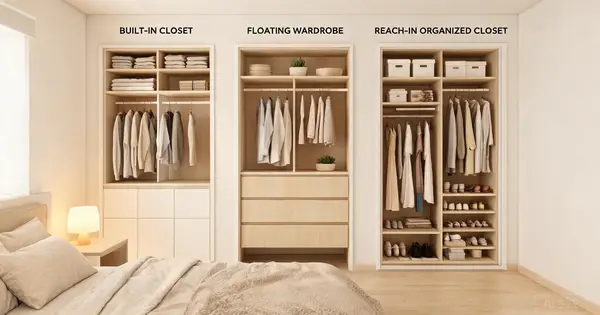
9 Closet Designs Compared: Best for Small Spaces 2026
From floor-to-ceiling built-ins to floating wardrobes — compare 9 small closet designs for 2026. Find the perfect space-saving solution for your apartment.
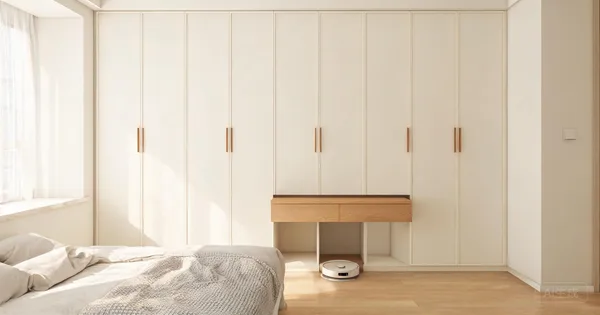
Low-Maintenance Storage: 5 Designs for a Cleaner Small Apartment
Storage should save space AND save your time. Explore 5 low-maintenance storage designs that keep your small apartment cleaner with less daily effort.
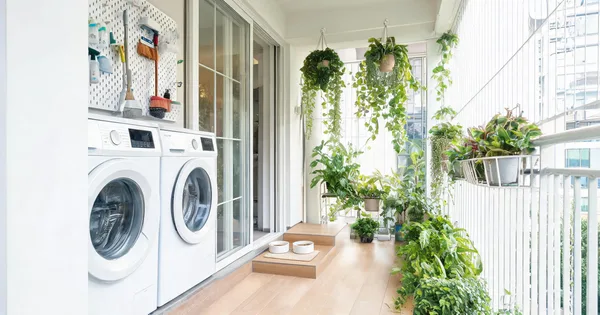
Multi-Purpose Balcony: Laundry, Cleaning, Pets & Plants in One
Your balcony can be more than a drying rack. Design one zone that holds a washer-dryer, cleaning tools, pet supplies, and plants without them fighting.

The 80/20 Storage Rule: How to Apply the 'Hide 80%, Show 20%' Philosophy in Your Small Apartment
The 80/20 storage rule is 2026's hottest home organization philosophy. Learn how to hide 80% of your belongings and display 20% to make your small apartment feel spacious, tidy, and effortlessly stylish.

Small Dining Room Storage: 10 Solutions for Your Apartment
Your small dining table is buried under mail, groceries, and clutter. Discover 10 smart storage solutions for small dining rooms — from wall shelves to multi-functional furniture.