Ultimate Wardrobe Organization Guide: Developer Built
Tired of a messy wardrobe even though you basically wear the same thing? Here's a capsule wardrobe approach that took me from 47 tees to 30 pieces—and cut my...
I used to own 47 t-shirts.
Yes, I counted. 47 of them—32 were black or dark gray, and the rest were freebies from various tech conferences. They stuffed my closet, but every morning I'd still reach for the same few shirts—because I couldn't find the others, and I couldn't be bothered to look.
Then one day my girlfriend came over, opened the closet, stared for a solid three seconds, and said: "You haven't worn half of these this year, have you?"
I wanted to argue, but when I actually thought about it, she was right. Some of those conference tees—I couldn't even remember what the talk was about, but I kept the shirt. The ones I bought on sale, the ones I threw in to hit free shipping, the ones I figured I'd "wear someday"—all of them were just gathering dust in the closet.
That's when I started researching capsule wardrobes. My closet now holds only 30 items, and my morning "what do I wear" time dropped from 10 minutes to 30 seconds.
I'm going to walk you through the whole process.
1. The Developer's Wardrobe Pain Points
Before we get to the solution, let's talk about the usual problems with a developer's closet:
Buying the same black/gray/blue shirt over and over. We always feel like we need one more black tee, and end up with a dozen nearly identical ones. Open the closet and it's a wall of black—finding what you want feels like groping around in the dark.
Conference t-shirts piling up. Every event gives you a tee. The quality is hit or miss, but you can't bring yourself to throw them away. They pile up, take up space, and you never wear them.
Can't find anything. Clothes are packed so tight that pulling one out sends the rest tumbling. When you're rushing in the morning, the more urgent you are, the less you can find. Eventually you just grab whatever's closest.
Seasonal chaos. Summer ends, but short-sleeve shirts are still hanging in the closet. Winter arrives, and the down jacket is buried somewhere in a box.
Boring outfits. Even with all those clothes, you keep wearing the same few combinations. After a while, even you get bored of them.
The whole point of a capsule wardrobe is to solve these problems. It's not about wearing less—it's about wearing better.
2. What Is a Capsule Wardrobe?
The concept is simple: use the fewest possible items to create the most outfits.
A typical capsule wardrobe contains 25-40 items, covering tops, bottoms, outerwear, and shoes. The colors work together, the styles are consistent, and the pieces can be mixed and matched to cover work, weekends, workouts, and dressier events.
Why a capsule wardrobe is great:
- Saves time: Fewer clothes, fewer choices, no more morning indecision
- Saves space: Closet isn't packed, everything is easy to find
- Saves money: No more impulse buys; every piece is chosen on purpose
- Better outfits: Every item is something you love, so you wear each combo with more confidence
For developers, capsule wardrobes are a perfect fit—our dress code is pretty consistent, we don't need a ton of flashy pieces, but every item needs to be practical, durable, and easy to pair.
3. Building It: From 47 Pieces Down to 30
Step 1: Pull it all out and sort
I dumped every piece of clothing from my closet onto the bed and sorted it into piles: tees, button-downs, jackets, pants, shorts, athletic wear, dress clothes, sleepwear.
Step 2: Filter with one question—"Did I wear it last month?"
For every item, I asked myself three questions:
- Did I wear it in the last month?
- Do I feel comfortable and look good in it?
- Does it pair well with my other clothes?
If the answer to all three was "yes," it stayed. If any answer was "no," it went into the "maybe" box.
Step 3: The "maybe box" test
The "maybe" clothes got sealed up and stored under the bed. If I didn't think to wear anything in there within two months, I donated or tossed it.
Step 4: Identify the core pieces
From what survived, I picked out my "core pieces"—the ones I wore most, paired easiest, and felt best in. My core looks like this:
- 5 t-shirts (3 black, 1 white, 1 gray)
- 2 button-downs (1 white, 1 blue)
- 2 jackets (1 denim, 1 casual blazer)
- 3 pairs of pants (2 casual, 1 dress)
- 1 pair of shorts
- 2 pairs of shoes (1 white, 1 black)
Step 5: Add seasonal and scenario pieces
On top of the core, I add pieces for the season or occasion:
- Winter: a down jacket, a sweater, a scarf
- Summer: a light button-down, a pair of shorts
- Workouts: a set of athletic wear, sneakers
- Dressy events: a suit, dress shoes
In the end, my wardrobe caps out around 30 items.
4. Wardrobe Zones: Hanging, Folding, Drawers
Once the clothes are pared down, organizing them gets way easier. My closet has three zones: hanging, folding, and drawers.
1. Hanging zone
The hanging area is for jackets, button-downs, and anything that wrinkles easily. I hang them longest to shortest, left to right: jackets on the far left (longest), button-downs in the middle, t-shirts on the right (shortest).
This setup looks clean visually, and grabbing one piece doesn't mess up the rest.
I switched all my hangers to velvet hangers. Wire hangers leave bumps in the shoulders, plastic ones are too slippery and clothes fall off. Velvet hangers are non-slip, leave no marks, and they're thin—same closet space fits 30% more clothes.
2. Folding zone
The folding zone is for t-shirts, sweaters, and pants. I use the vertical folding method (KonMari): fold each item into a small rectangle and stand it upright in the drawer or storage box. Pull one out and the rest stay put.
Folding t-shirts:
- Lay flat, back side up
- Fold both sides toward the center to form a long strip
- Roll or fold up from the bottom into a small rectangle
- Stand upright in the drawer
Folding pants:
- Fold in half, legs aligned
- Roll or fold from the ankle up to the waistband
- Stand upright in the drawer
3. Drawer zone
The drawer zone is split into smaller sections using dividers:
- Underwear section: underwear and socks
- Accessories section: belts, ties, hats
- Misc section: spare buttons, sewing kit
Underwear and socks I roll up and stand upright in the dividers—everything is visible at a glance.
5. Recommended Storage Tools
1. Velvet hangers
Mentioned above—non-slip, no shoulder bumps, space-saving. I bought 50 and replaced every wire and plastic hanger in my closet.
2. Drawer dividers
Adjustable plastic dividers you can configure to fit any drawer. I bought two sets—one for underwear and socks, one for accessories.
3. Vacuum compression bags
Seasonal items (down jackets, thick sweaters) go into vacuum bags and live in the top of the closet or under the bed. They shrink to 30% of their original volume—huge space saver.
4. Storage boxes for clothes
Rarely worn dress clothes and suits go into fabric storage boxes on the top shelf of the closet. The boxes are transparent, so I can see what's inside without opening them.
6. Storing Off-Season Clothes
A capsule wardrobe isn't static—you rotate it with the seasons.
My seasonal rotation:
- One week before the season change: Pull out all current-season clothes, check for repairs or anything to retire
- On the day: Pack the previous season's clothes into vacuum bags, move the new season's clothes into the closet
- Where to put off-season stuff: Vacuum bags go on the top closet shelf or under the bed; storage boxes go on the very top shelf
Winter storage:
- Down jackets and heavy coats: hang with dust covers
- Sweaters: folded upright (don't hang, they stretch out)
- Scarves and gloves: in the drawer dividers
Summer storage:
- T-shirts and shorts: folded upright
- Light button-downs: hung up
- Sandals: in their original shoe boxes
7. 30 Items, Dozens of Outfits
A lot of people worry a capsule wardrobe will look boring. But 30 well-chosen pieces, combined well, can produce dozens of different outfits.
My outfit logic:
- Workdays: Tee + casual pants + casual blazer, OR button-down + dress pants
- Weekends: Tee + jeans + denim jacket, OR button-down + shorts
- Workouts: Athletic tee + athletic pants + sneakers
- Dressier events: White button-down + dress pants + blazer + dress shoes
Color rules:
- Neutrals (black, white, gray, blue) make up 80%
- Accent colors (red, green, yellow) make up 20%
- No more than 3 colors in one outfit
With this system, 30 pieces can build at least 20 different outfits. You can go a full month without repeating a look.
Wrapping Up
From 47 items to 30, my closet is emptier, but my life is simpler.
Every morning, I open the closet, see all 30 pieces at a glance, and pick out what I'm wearing in 30 seconds. No more indecision, no more digging, no more being late because I couldn't find anything.
As a developer, I love that "lean but effective" feeling. When we write code, we refactor—strip out the bloat, keep the essentials. A closet should work the same way—ditch the "I might wear it someday" stuff, keep the "I want to wear this today" stuff.
Hope this helps. If you're building a capsule wardrobe of your own, I'd love to hear how it's going.
Related Articles
Ultimate Wardrobe Organization Guide: Developer's Approach
A developer's closet is full of clothes that never get worn, while only a few get all the use. This guide walks you through decluttering and building a...
Seasonal Clothes Organization: Summer-Winter Switch System
A guide to seasonal clothes organization—systematic classification and smart storage to compress summer-winter transitions from a day to two hours.
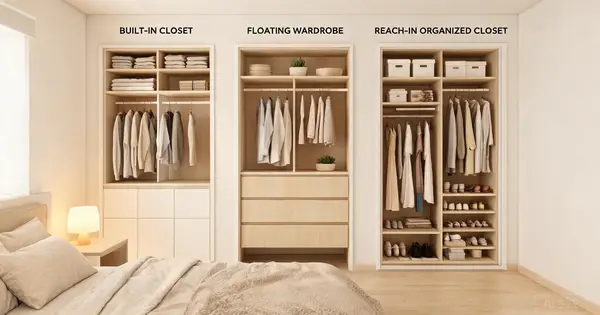
9 Closet Designs Compared: Best for Small Spaces 2026
From floor-to-ceiling built-ins to floating wardrobes — compare 9 small closet designs for 2026. Find the perfect space-saving solution for your apartment.
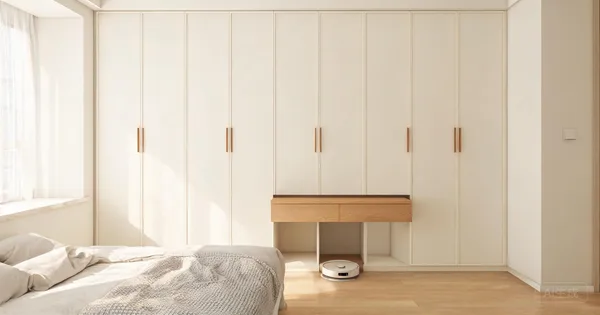
Low-Maintenance Storage: 5 Designs for a Cleaner Small Apartment
Storage should save space AND save your time. Explore 5 low-maintenance storage designs that keep your small apartment cleaner with less daily effort.
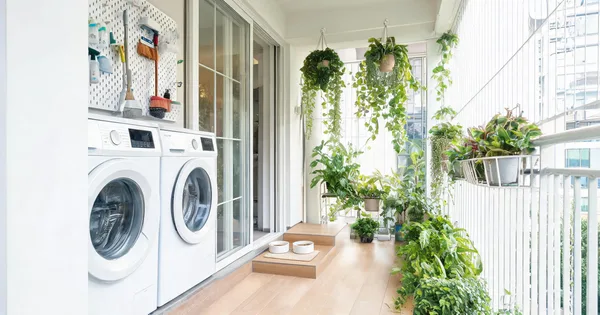
Multi-Purpose Balcony: Laundry, Cleaning, Pets & Plants in One
Your balcony can be more than a drying rack. Design one zone that holds a washer-dryer, cleaning tools, pet supplies, and plants without them fighting.

The 80/20 Storage Rule: How to Apply the 'Hide 80%, Show 20%' Philosophy in Your Small Apartment
The 80/20 storage rule is 2026's hottest home organization philosophy. Learn how to hide 80% of your belongings and display 20% to make your small apartment feel spacious, tidy, and effortlessly stylish.