How to Store Bulk Items in a Small Apartment
Stocking up on paper towels and cleaning supplies shouldn't mean clutter. Learn how to manage bulk storage in a small apartment with a smart zone system.
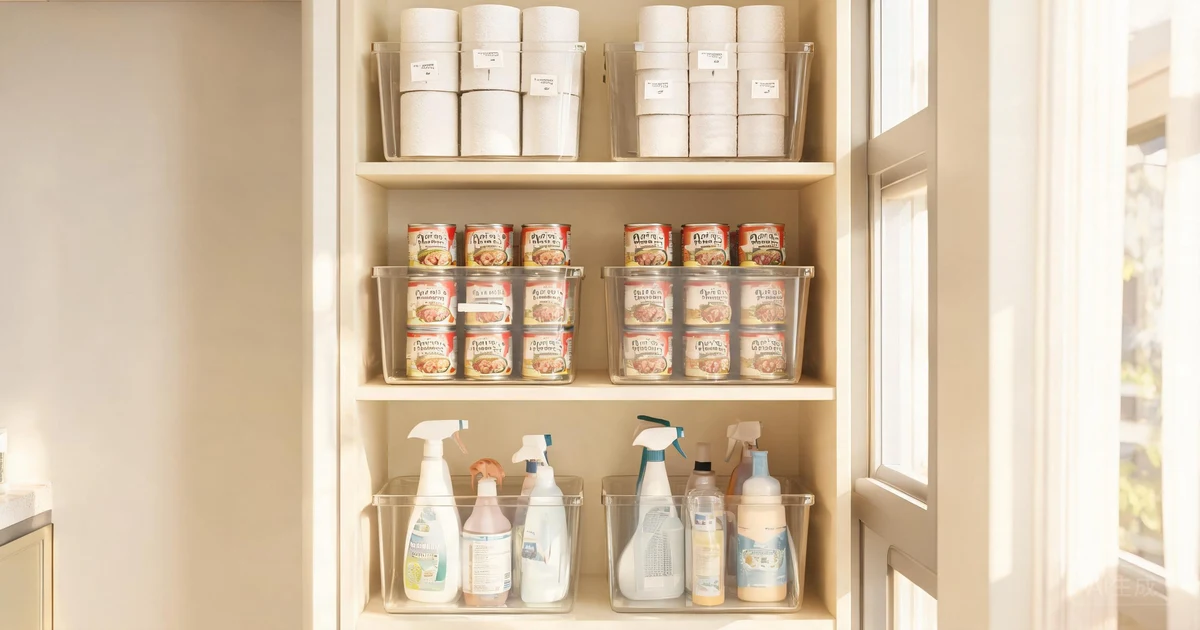
The Bulk Buying Balancing Act
Leah called me about a closet that wouldn't close. Inside I found twelve rolls of paper towels, six plastic bags of sponges, three half-empty bottles of laundry detergent, and a case of canned beans that had been sitting long enough to collect a fine layer of dust. She had kept shopping at the warehouse club the way her family used to, when there was a garage to absorb the overflow. Her new home was a forty-square-meter studio.
I hear this story constantly. Buying in bulk saves real money on paper goods, cleaning supplies, and shelf-stable food. But in a small apartment, space is the currency that matters most. When your storage disappears under a mountain of twelve-packs, you lose the closets, drawers, and counters you actually need for daily life.
The solution is not to stop stocking up. It's to give your bulk stash a structure. In my years as a professional organizer I've helped dozens of renters keep a full supply of everyday essentials without surrendering a single shelf they use every day. The system I share below is built around one simple idea: a smart zone plan for bulk storage. Here's how to make it work in your own apartment.
1. Sort Your Stash Into Four Groups
Before you buy anything else, sort what you already own. I sit on the floor with every client and divide the pile into four clear categories:
- Paper goods — paper towels, toilet paper, tissues, napkins.
- Cleaning supplies — detergent, dish soap, sprays, sponges, trash bags.
- Stable food — canned goods, pasta, rice, boxed mixes, coffee, condiments.
- Other consumables — personal care backups, batteries, pet food, cleaning cloths.
Why this classification matters: these four groups need different storage conditions. Paper stays dry and out of the way. Food must be kept away from cleaning products and anything with leaks. Grouping them this way also stops you from rebuying what you forgot you owned. One client found four bottles of glass cleaner scattered across three rooms, simply because there was no single home for them.
2. Assign a Zone to Every Category in Upper, Middle, and Lower Cabinets
Think of your kitchen and pantry cabinets as three bands: upper, middle, and lower.
- Upper shelves hold light, low-rotation items like extra paper towels and rarely used mixes.
- Middle shelves keep the daily essentials you reach for morning and night.
- Lower shelves and floor-level cabinets carry the heavy stuff — bottles of detergent, jugs, and cases of canned goods.
Inside each big category, keep like with like. All all-purpose cleaners together. All canned vegetables on one shelf, with new cans pushed to the back. I also recommend grouping by weight: put the heaviest, most awkward boxes at floor level so you never wrestle a twenty-pack of paper towels down from a high shelf.
For small apartments with a shallow pantry door, the back of that door is a free vertical zone. A slim over-the-door organizer with clear pockets gives every bottle of spray and cleaning cloth a specific pocket, so nothing drifts to the back of a cabinet.
3. Claim the Spaces Nobody Uses
A bulk stash is full of items you reach for once a week, not every hour. That makes them perfect candidates for the dead zones most renters ignore.
Under the bed. Low-profile containers slide under the frame and hold the overstock of paper towels, tissue boxes, and backup trash bags. This is one of the largest unused footprints in any small bedroom, and it's completely out of sight.
Above the cabinets. That strip of dust between the cabinet tops and the ceiling can hold one box per stack. Use it for the least-accessed supply you still want to keep, like a spare case of bottled water or an extra pack of paper towels.
The hallway and entryway. If you have a coat closet or a storage bench near the front door, reserve one shelf for cleaning supplies you grab on the way to the bathroom. Your future self will thank you when you don't have to cross the whole apartment for a roll of paper towels.
Bottom-of-cabinet pull trays. A simple baking sheet or flat tray under the sink lets you slide a whole row of overflow supplies forward instead of reaching into the dark.
The rule of thumb: the less often you use an item, the further from your daily routine it can live. Keep the most-used things within arm's reach, and push the bulk reserves to the far edges where they stay out of your way.
4. Manage Your Inventory Like a Mini Pantry Manager
Buying in bulk without tracking your stock is how you end up with four bottles of glass cleaner. Two habits fix this in almost every home I work with.
First in, first out. When you restock a shelf, rotate the products. Push the older items to the front and set the new ones behind them. For food, this is also a safety habit — it keeps canned goods and boxed mixes from sitting past their best-by dates. For paper and cleaning products, it simply means everything gets used in a sensible order.
Labels, always. A sticky label with one or two words turns "a box full of stuff" into a system. Label the front of every bin and every shelf band: "Paper Towels," "Canned Soup," "Detergent." The label does two jobs at once. It shows you where an item belongs, and it shows you when a category is running low, so you can add it to your shopping list before you run out.
Take a photo of your labeled zones with your phone. The next time you're at the store, you can check the photo to see exactly what needs restocking. It saves you from impulse-buying a fifth bottle of something you already have and helps you catch what's actually empty.
5. Think Transparent, Stackable, and Measured
The two words that sum up every successful bulk storage system are "transparent" and "stackable." Clear bins let you see how much is left before you buy anything new. Stackable containers let you use vertical air instead of spreading boxes across the floor.
For food, move shelf-stable items out of their torn original packaging and into clear, stackable containers with lids. Canned goods stay in a shallow stackable can rack so you can see exactly how many you have left at a glance. These bins turn a jumbled cabinet into something you can scan in two seconds.
If you're building from scratch, a set of clear stackable bins with lids is the single highest-value purchase. A good pack runs around $25 to $40 and gives you uniform containers that tuck neatly onto any shelf. Keep the dimensions consistent so every shelf holds the same number of bins — it looks tidy and wastes no space.
A final note on restraint: "measuring" your space means setting a limit for each zone. When a bin is full, that's the maximum you stock for that item. The bin, not the warehouse, decides how much you buy. This keeps your bulk habit from creeping back into the rest of the apartment.
The Bottom Line
Bulk shopping and small apartments are not enemies. The fix is a system: sort your stash into categories, give each group a zone, reclaim the dead spaces, rotate and label your stock, and store it in transparent, stackable, measured containers. You keep the money you save on every twelve-pack, and you get your closets and counters back.
Start small. Handle one category — paper goods is the easiest — and build the zones one at a time. A tidy bulk system you can maintain beats a perfect-looking one you abandon after a week. For a deeper dive into related storage topics, explore our cleaning supplies storage guide or read about transparent versus opaque storage boxes to decide what fits your shelves best.
Related Articles

Adaptable Storage: Systems That Grow With Your Small Home
Lifestyles change—from solo to roommate to pets. Discover adaptable, modular storage systems that flex with your needs so you buy storage once.
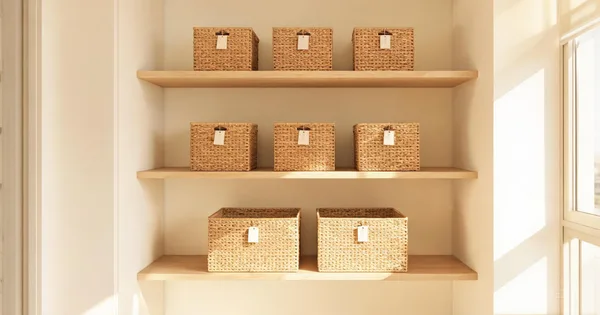
Guest-Ready in 10 Minutes: Storage for Quick Cleanups
What if friends texted and said they're coming over in 10 minutes? Build a guest-mode storage system so your small apartment looks tidy fast and stress-free.
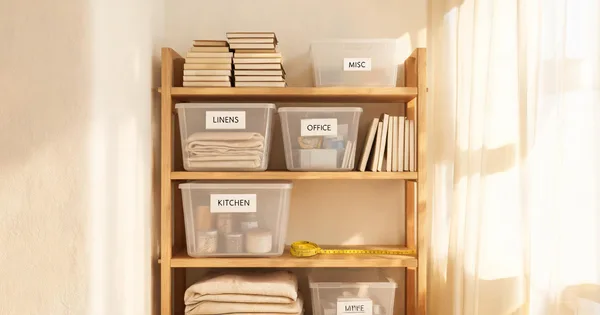
How Much Storage Do You Need? A Small Apartment Calculator
Not sure how many shelves or bins you really need? Use this simple storage calculator to plan your small apartment's storage by actual item volume.
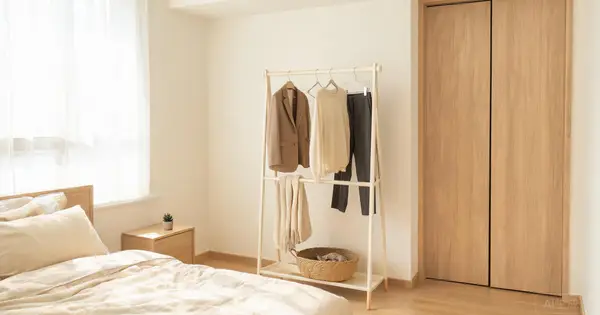
Worn Clothes Storage: 5 Solutions for the Chair Pile
Tired of the clothes pile on your chair? Here are 5 practical worn clothes storage solutions for small apartments — from stylish racks to hidden hampers.
Low-Maintenance Storage: 5 Designs for a Cleaner Small Apartment
Storage should save space AND save your time. Explore 5 low-maintenance storage designs that keep your small apartment cleaner with less daily effort.
5 Best Foldable Storage Shelves 2026: Tested for Small Apartments
Foldable storage shelves are 2026's hottest small apartment essential. I tested 5 top models for durability, capacity, fold mechanism, and real-world use. Find the perfect one for your space.