2026 Smart Storage Tools Roundup: 10 Gadgets Tech Meets
What happens when organization meets tech? This article reviews 10 smart storage tools, from smart label printers to auto-sealing trash cans — which ones are...
As a developer, I have a natural affection for the word "smart."
My home has gone from smart speakers to smart bulbs, robot vacuums to smart locks — anything that can be connected, I've connected. But smart storage tools were a category I hadn't really explored, until last year when I started systematically organizing my home and realized organization can be pretty high-tech too.
Over the past year, I've tried over a dozen smart storage tools, some genuinely useful, some just there. Today I'm rounding up 10 worth talking about, to help you avoid the hype.
1. Smart Label Printer (Rating: ★★★★★)
This is the most practical smart storage tool I've used, bar none.
I got the Brother P-touch, about $20, connects via Bluetooth to your phone, edit label content in the app, print and stick on storage bins, folders, and spice jars.
Why it's good:
I used to hand-write labels — the handwriting was sloppy, the labels peeled off, and they smeared. The label printer produces clear, waterproof, oil-resistant labels that don't leave residue when peeled off.
My whole organization system now runs on it: wardrobe clothing bins labeled "Winter Sweaters," "Summer T-shirts"; kitchen spice jars labeled "Salt," "Sugar," "Sichuan Pepper"; bookshelf folders labeled "Contracts 2025," "Receipts." Find what you need without opening a thing.
Tips:
Label content should be specific. Don't write "Misc," write "Charging Cables + Batteries." Stick labels at eye level on the front, not on top. Use different color labels for different categories, easier to distinguish visually.
Downsides:
Label paper is a consumable, a roll is a few bucks, and using a lot adds up. Plus the print width is limited, so long content doesn't fit.
2. Motion-Sensor LED Strip (Rating: ★★★★★)
Deep in the closet, under the cabinet, under the bed — these dark corners are a pain to find things in.
I got a few motion-sensor LED strips, stuck them inside the closet, under the cabinet, under the bed. Walk near and they light up, walk away and they turn off. Rechargeable, no wiring, just stick them on.
Why it's good:
No more flashlights when looking for things. Especially deep in the closet, used to take forever to find a shirt — now the light comes on and you can see everything clearly.
I also put one under the bed. When I get up at night, my feet hit the floor and the light comes on — no fumbling for the switch, and it's not blinding.
Buying tips:
Get rechargeable ones, hardwiring is a hassle. Sensor sensitivity should be moderate — too sensitive and it lights up on every breeze, too sluggish and you have to wave at it. The brightness doesn't need to be high, these are for accent lighting, not main lighting.
3. Smart Trash Can (Rating: ★★★★☆)
I got the TOWNEW smart trash can, about $50, auto-seals and auto-replaces the bag.
Why it's good:
Sensor lid, hand-wave to open, no contact. When the trash is full, press a button and it auto-seals the bag — pull it out and toss, no dirty hands. Then it auto-replaces with a new bag, the whole process without touching trash.
Perfect for the kitchen — kitchen waste smells, and the auto-seal keeps the smell contained.
Downsides:
Expensive, $50 for a trash can is steep. The proprietary bags are also consumables, more expensive than regular bags. Plus it needs charging, and when the battery's dead, it just becomes a regular trash can.
Best for:
People with high hygiene standards, and a flexible budget. A regular trash can works fine — this is a "nice-to-have" upgrade.
4. Smart Dehumidifier Box (Rating: ★★★★☆)
Anyone from a humid climate knows — monsoon season, the closet and drawers are full of moisture, clothes get moldy, books get spots.
I got a few smart dehumidifier boxes, with reusable absorbent beads inside. When full of water, plug it in to dry out, then use it again.
Why it's good:
Traditional dehumidifier boxes are single-use — once they're full of water, throw them away, expensive and not eco-friendly. The smart ones can be reused — plug it in for a few hours to dry, and it's good to go.
I put one in the closet, one in the bathroom, and the effect is obvious. Used to be the clothes had a musty smell in monsoon season, now they don't.
Downsides:
When drying, it needs to be plugged in and gets a little warm, so put it in a ventilated spot. Limited absorption capacity, larger spaces need multiple units.
5. Kitchen Scale + Inventory App (Rating: ★★★☆☆)
This combo is a bit geeky, but it works.
I got a kitchen scale, paired with an "inventory assistant" app (I made up the name, but apps like this exist). Weigh what you have and log it in the app, like "2.3kg of rice left," "500ml of laundry detergent left."
Why it's good:
You know exactly what you have and how much, so you don't double-buy or run out at the last minute. Once I was halfway through cooking and ran out of salt — now the app tells me the inventory, so I buy in advance.
Downsides:
Too much hassle. Every time you use something you have to weigh and log it, hard to keep up. Now I only do this for important things like cat food and rice, everything else is on a wing and a prayer.
Best for:
People who really value efficiency and have some OCD. Normal people will find it annoying.
6. Smart Pill Box (Rating: ★★★☆☆)
I got a smart pill box, can set reminders, alerts with sound and light when it's time. Also logs medication history, viewable in the phone app.
Why it's good:
My stomach isn't great, and I need to take medicine on schedule. I used to forget often, now the pill box beeps, hard to forget. Also great for travel, doesn't disrupt the routine.
Downsides:
Single function, only reminds you to take medicine. Plus the compartments are small, can't hold a lot.
Best for:
People on long-term medication who are forgetful. If you're healthy, this is useless to you.
7. Electric Vacuum Pump for Compression Bags (Rating: ★★★★★)
I covered this in detail in a previous article, but quick mention here.
The electric pump is 10x more efficient than a manual pump, finishes a bag in a minute. USB rechargeable, can take on trips.
Why it's good:
The manual pump takes five minutes on a big bag, and your hand is sore afterward. The electric one finishes in a minute, saves effort and time. When I'm doing season change storage, ten-plus bags are all done in half an hour.
Downsides:
Needs charging, when dead you fall back to the manual pump. It's a bit noisy, using it at night might disturb the neighbors.
8. Smart Drawer Lock (Rating: ★★★☆☆)
I got a fingerprint drawer lock, installed on a drawer that holds important documents.
Why it's good:
No key needed, one touch of your finger to open. Can register multiple fingerprints, the whole family can use it. More convenient than a traditional lock, and more secure than a combination lock (combinations can be leaked, fingerprints can't).
Downsides:
Installation requires drilling, which damages the drawer. Needs battery replacement, no power and you can't open it. Plus if the fingerprint is worn or your hand is wet, the recognition rate drops.
Best for:
People with important documents or valuables to protect. Average households might not need it.
9. Smart Storage Cabinet (Rating: ★☆☆☆☆)
I tried a so-called "smart storage cabinet" with fingerprint lock, motion-sensing lights, and humidity monitoring — over $300.
Why it's bad:
It's a kitchen-sink approach, but every feature is poorly executed. Fingerprint lock is slow, motion-sensing light is unreliable, humidity monitoring is inaccurate. Plus the cabinet's basic design is mediocre, not as practical as a regular cabinet.
It feels like they crammed a few ordinary features together and slapped a "smart" label on it for a higher price. After two months, I was using it as a regular cabinet, never touching the smart features.
Verdict:
Not recommended. Smart storage cabinets aren't mature yet, and the value is poor. Better to buy a good regular cabinet and add the smart accessories you need separately.
10. RFID Item Tracker (Rating: ★☆☆☆☆)
I bought a few Tile trackers, stuck them on my keys, wallet, and remote. When I can't find something, the phone app makes it beep.
Why it's bad:
In theory, it's great. In practice, there are lots of issues. The trackers themselves fall off easily — after two weeks on my keys, it fell off. Battery life is average, needs replacing every few months. Plus the range is limited, out of Bluetooth range and you can't find it.
I still have one on my keys, but I basically never use it. When I can't find something, I just rely on memory and searching.
Verdict:
Not really recommended. The technology isn't mature, the experience is mediocre. Unless you're someone who constantly loses things, it's not necessary.
Smart Storage Tool Buying Principles
Solve a real pain point: good smart tools solve problems that traditional tools can't. For example, the label printer solves the ugly, fall-off problem of handwritten labels. Products that are smart for the sake of being smart tend to be useless.
Consider frequency of use: things you use every day are worth investing in a smart version. Things you use occasionally, the regular version is enough.
Calculate the total cost: smart tools often have consumables or maintenance costs. The label printer's paper, the smart trash can's bags, the dehumidifier box's electricity — factor those in.
Don't go all-in on smart: not every organization scenario needs smart. My principle: if manual works, don't bring in tech; if manual is annoying, then consider smart.
Summary
Among smart storage tools, truly good ones are few and far between. The label printer, motion-sensor LED strips, and electric vacuum pump — these three I use every day, and I highly recommend them. The smart trash can and dehumidifier box are nice-to-haves, worth it if the budget allows. The rest aren't mature yet, I'd suggest waiting.
Tech should make life simpler, not more complicated. If a smart storage tool is more annoying to use than a traditional one, it's not worth buying.
I hope this roundup helps. If you have any smart storage tool recommendations, feel free to share them in the comments.
Related Articles
Smart Storage Tools Guide: Using Technology Refactor Your
As a programmer, I believe technology can solve all efficiency problems, including storage. This article deeply reviews smart storage tools including...
Renter's Removable Storage Tools Buying Guide | Move Out Without a Trace, Double Your Space
Three years out of college, five moves. I've learned a thing or two about removable storage tools. From no-drill shelves to folding bins, these renter-frie...

Adaptable Storage: Systems That Grow With Your Small Home
Lifestyles change—from solo to roommate to pets. Discover adaptable, modular storage systems that flex with your needs so you buy storage once.
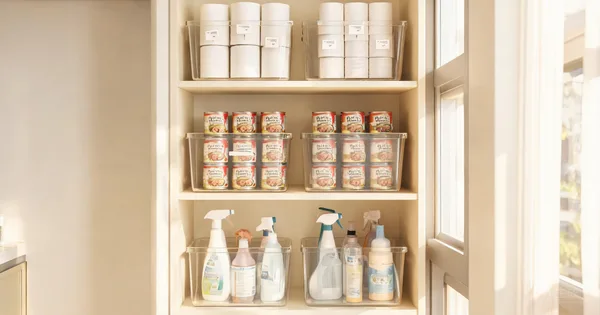
How to Store Bulk Items in a Small Apartment
Stocking up on paper towels and cleaning supplies shouldn't mean clutter. Learn how to manage bulk storage in a small apartment with a smart zone system.

Guest-Ready in 10 Minutes: Storage for Quick Cleanups
What if friends texted and said they're coming over in 10 minutes? Build a guest-mode storage system so your small apartment looks tidy fast and stress-free.
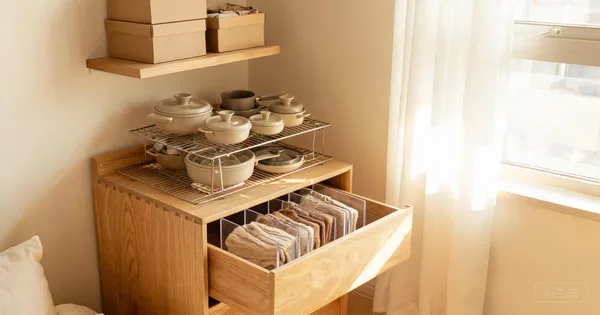
Ways to Repurpose: Clever Storage Hacks for Small Apartments
Save money and space by repurposing everyday items into smart storage. Discover creative upcycling hacks that organize your small apartment on a budget.