Small Kitchen Essentials: Storage & Organization Guide
Cooking in a tiny kitchen? These essential storage tools and organization hacks maximize counter space, cabinet space, and efficiency—perfect for...
My last apartment kitchen was 30 square feet. I'm not exaggerating—I could stand in one spot and reach the fridge, the sink, and the stove. The cabinets were so shallow I couldn't fit my cereal boxes standing up. It took me six months of frustration, a lot of Amazon returns, and one very memorable attempt at mounting a magnetic knife strip on a tile wall to figure out what actually works in a tiny kitchen. Here's everything I wish I'd known on day one.
The Golden Rule of Small Kitchens
If you take nothing else from this guide, remember this: if you don't use it at least once a week, it doesn't belong in your kitchen. Small kitchens can't be storage spaces for gadgets you use once a year (looking at you, panini press). The goal is to have your daily-use items within reach and everything else either stored elsewhere or donated.
I went through my kitchen and asked myself one question about every item: "Did I use this in the last month?" If the answer was no, it either went to a cabinet above the fridge (the "dead storage" zone), got stored in a closet, or got donated. I cut my kitchen stuff by about 40% and suddenly had more space than I knew what to do with.
Countertop Storage: Keep It Clear
Counter space is gold in a small kitchen. The less stuff on your counters, the bigger the kitchen feels—and the more room you have to actually cook.
1. Over-the-Sink Dish Drying Rack
Instead of a drying rack that takes up half your counter, get one that sits over the sink. It drains directly into the sink, uses dead space, and you can push it to the back when you need the sink.
The iSPECLE Over-the-Sink Dish Drying Rack is what I use. It's adjustable (fits sinks 25-33 inches wide), has a utensil holder, and even has a spot for cutting boards. Price: $40-$60. Buy on Amazon
2. Magnetic Spice Rack Set
If you have a fridge with exposed sides, magnetic spice racks are a game-changer. They stick right to the side of your fridge, keep your most-used spices within reach, and free up cabinet space.
The Copco Magnetic Spice Tins (set of 6) are a good starting point. They have clear tops so you can see what's inside, and they stick to any magnetic surface. Price: $25-$40. Buy on Amazon
3. Paper Towel Holder (Wall or Under-Cabinet Mount)
Get your paper towels off the counter. A wall-mounted or under-cabinet paper towel holder is a $10 upgrade that frees up valuable counter space. Just make sure it's near the sink where you actually use it.
Cabinet Storage: Double Your Space
Most apartment kitchen cabinets are designed poorly—shelves that are too far apart, wasted vertical space, and corners you can't reach. Here's how to fix that.
1. Shelf Risers / Cabinet Shelves
If your cabinet shelves are spaced 12+ inches apart, you're wasting half the space. Add shelf risers to create extra levels. I use them for mugs (top shelf) and bowls (bottom shelf)—doubles the storage.
The Simple Houseware Stackable Cabinet Shelf (set of 2) is affordable and sturdy. They're 12.6 inches wide and stackable if you need more height. Price: $20-$35. Buy on Amazon
2. Under-Shelf Baskets
Slide these onto the bottom of a shelf and you instantly get extra storage for things like napkins, sandwich bags, or small containers. No tools needed—they just slide on. I have one under every shelf in my cabinets.
3. Lazy Susan for Corner Cabinets
Corner cabinets are the worst—half the space is unreachable. A turntable (lazy Susan) fixes that. Put all your sauces, vinegars, and oils on it, and just spin it to find what you need. No more knocking over five bottles to reach the soy sauce at the back.
Refrigerator Organization: Make It Work Harder
A cluttered fridge feels smaller and makes food go bad faster. Here's how to organize it so you can see everything and nothing gets lost in the back.
Clear storage bins are the secret. Group similar items together in bins—dairy in one, leftovers in another, snacks in a third. When you need something, you pull out the whole bin instead of digging around.
The Sorbus Fridge and Freezer Organizer Bins (set of 8) are the perfect size for most apartment fridges. They're clear so you can see what's inside, have handles for easy pulling, and are dishwasher safe. Price: $30-$50. Buy on Amazon
Egg holders and soda can organizers are optional—skip them if they don't actually save you space. For me, the egg holder was a waste because it took up more room than just leaving eggs in the carton.
Pro tip: Label your leftovers with the date. I use masking tape and a Sharpie—takes two seconds and saves you from playing "guess the moldy container" two weeks later.
Multi-Functional Kitchen Tools: One Tool, Many Jobs
The fewer gadgets you have, the more space you have. These are the tools that earn their place by doing multiple jobs:
1. A Good Chef's Knife
Skip the knife block with 15 knives you never use. One good 8-inch chef's knife, a paring knife, and a serrated bread knife are all most people need. The chef's knife does 90% of the work.
2. Food Processor / Blender Combo
Instead of a separate food processor AND blender, get one that does both. The Ninja BN601 Professional Food Processor is powerful enough for most jobs and takes up way less counter/cabinet space than two appliances. Price: $80-$120. Buy on Amazon
3. Sheet Pans (Cookie Sheets)
A set of 2-3 sheet pans does double duty as baking sheets, roasting pans, and even serving trays. Stack them flat or store them vertically in a cabinet.
4. Dutch Oven
If you cook regularly, a Dutch oven replaces your soup pot, your roasting pan, your rice cooker (sort of), and even your skillet in a pinch. It's heavy and takes up some space, but it replaces so many other things that it's worth it if you have the cabinet room.
5. Immersion Blender
Takes up about as much space as a whisk but does the job of a full-size blender for soups, smoothies, and sauces. Way easier to store than a countertop blender.
Cooking Workflow: Arrange for Efficiency
How you arrange your kitchen matters as much as what storage tools you buy. Here's how to set up your kitchen for maximum efficiency:
The work triangle rule: Your fridge, stove, and sink should form a triangle (or as close as possible). This minimizes the number of steps you take while cooking. In a tiny kitchen, this usually means they're already close—just make sure nothing is blocking the path between them.
Zone your kitchen:
- Prep zone: Near the sink, with your cutting board and knives
- Cooking zone: Near the stove, with your pots, pans, and spices
- Storage zone: Pantry/cabinet area for dry goods
In a small kitchen, these zones will overlap—and that's okay. The goal is to have the things you use for a specific task near where you do that task.
Hang what you can:
If you have empty wall space (or can use adhesive hooks), hang your pots and pans, your mugs, or your utensils. It frees up cabinet space and looks kind of cool, too. Just make sure your landlord is okay with it—adhesive hooks leave less damage than drilling.
Budget Breakdown
Under $100 total:
- Over-the-sink dish rack ($40-$60) + shelf risers ($20-$35) + fridge bins ($30-$50)
- Best for: renters on a budget, starting from scratch
- Focus on the things that give you the most space bang for your buck
$100-$250 total:
- All of the above + magnetic spice racks ($25-$40) + under-shelf baskets ($20-$30) + lazy Susan ($15-$25)
- Best for: people who cook regularly
- Gets your kitchen completely organized
$250+:
- All of the above + a multi-functional appliance (food processor, Dutch oven, etc.)
- Best for: home cooks who want to upgrade their tools
- Focus on tools that replace multiple single-use gadgets
The One Thing to Do Today
If you only do one thing to improve your small kitchen, do this: take everything out of your cabinets, sort it into "use weekly," "use monthly," and "rarely use," and find a new home for the "rarely use" stuff. Put the "monthly" items on high shelves or in the back, and keep the "weekly" items at eye level and within easy reach.
I did this on a Sunday afternoon and it completely changed how I feel about my kitchen. Suddenly I could find what I needed without digging, I had more counter space, and cooking stopped feeling like a chore in a tiny space. Small kitchens don't have to be frustrating—they just need the right systems.
Related Articles
2 Square Meters Kitchen? Developer's High-Efficiency Kitchen
How do you organize a 2-square-meter kitchen? A developer shares hands-on tested kitchen storage solutions — from walls to cabinets — to make a tiny kitchen...
Rental Kitchen Makeover: Useless Ultra-Efficient (Under
As a programmer, I transformed my 43 sq ft rental kitchen into an efficient cooking space in two weeks. Here's my complete guide for counter expansion...
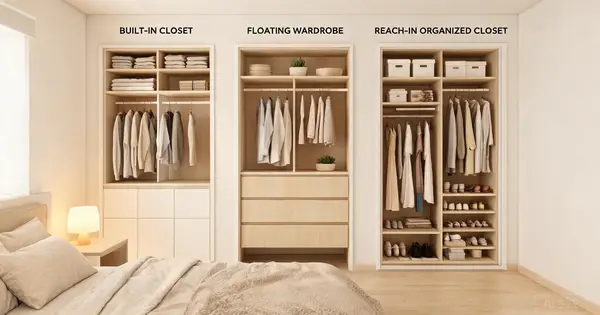
9 Closet Designs Compared: Best for Small Spaces 2026
From floor-to-ceiling built-ins to floating wardrobes — compare 9 small closet designs for 2026. Find the perfect space-saving solution for your apartment.
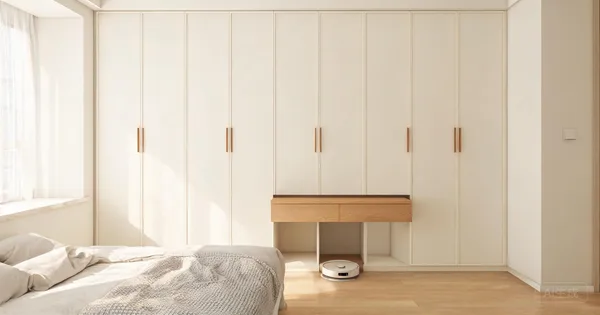
Low-Maintenance Storage: 5 Designs for a Cleaner Small Apartment
Storage should save space AND save your time. Explore 5 low-maintenance storage designs that keep your small apartment cleaner with less daily effort.
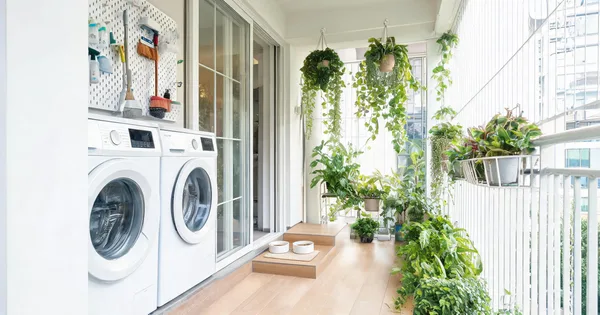
Multi-Purpose Balcony: Laundry, Cleaning, Pets & Plants in One
Your balcony can be more than a drying rack. Design one zone that holds a washer-dryer, cleaning tools, pet supplies, and plants without them fighting.
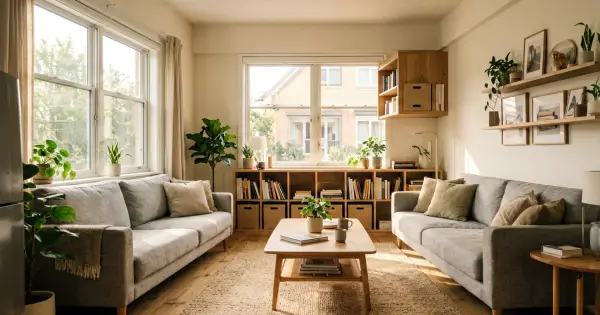
The 80/20 Storage Rule: How to Apply the 'Hide 80%, Show 20%' Philosophy in Your Small Apartment
The 80/20 storage rule is 2026's hottest home organization philosophy. Learn how to hide 80% of your belongings and display 20% to make your small apartment feel spacious, tidy, and effortlessly stylish.