Medicine Supplement Organization: Renter's Practical Guide
A renter developer's medicine stash is usually scattered everywhere, and some of it is long past its expiration date. This post shares a renter-friendly...
Last month, at 2 a.m., I woke up with a sharp stomachache.
I dug through drawers for twenty minutes and finally found a box of stomach medicine in the back of some drawer. But after I took it, the symptoms didn't ease. I looked at the box more carefully—expired two years ago. At that point I was in pain and angry at myself, wishing I could write a unit test for the "robustness" of my medicine management system.
As a solo renter developer, my medicine management was best described in one word: chaos. Cold medicine in the nightstand, painkillers in a desk drawer, band-aids in a junk box by the entryway, vitamins in some random cardboard box. Every time I needed something, it was like running a full table scan on a distributed system—slow, and often fruitless.
Worse, I had no idea which medicines were already expired. Some were bought three years ago for a cold. Some came as company benefits. Some were leftovers from a doctor visit, shoved somewhere after I finished the course.
After that stomach episode, I decided to do a full refactor of my medicine management.
Step 1: Full Inventory—An "Asset Audit" of Your Medicine
First, I went through every place in the house that might be hiding medicine: the nightstand, desk drawers, the top of the wardrobe, kitchen cabinets, the entryway junk box, the side pocket of my suitcase.
I spread everything I found on the coffee table, and the amount genuinely surprised me:
- Cold medicine: 5 boxes, 3 of which were already opened
- Painkillers: 3 boxes, two different active ingredients
- Stomach medicine: 4 boxes
- Topical treatments: iodine, band-aids, burn cream, various
- Supplements: vitamins, fish oil, probiotics—seven or eight bottles
- Prescription meds: a few leftovers from past doctor visits, some I couldn't even remember what they were for
- Other: thermometer, gauze, cotton swabs
I went through every expiration date, and the numbers were sobering: 40% of the medicines were already expired, and another 20% would expire within three months. More than half of what I'd stockpiled was "dead code"—taking up space, providing no value, and potentially dangerous.
Expired medicines went straight into a bag and got dropped off at the local pharmacy's disposal point. Don't just throw them in the trash—expired meds count as hazardous waste and need special handling.
Step 2: Categorization—Designing a "Data Model" for Your Medicine
After clearing out the expired stuff, I needed a clear classification system. Based on use case and urgency, I split the rest into:
Oral medications (by symptom):
- Cold and fever: fever reducers, cold medicine
- Stomach issues: antacids, anti-diarrheal, probiotics
- Pain and inflammation: ibuprofen, acetaminophen
- Allergies: loratadine and other antihistamines
- Chronic condition meds: anything you take long-term, kept in its own category
Topical treatments:
- Wound care: band-aids, iodine, gauze, bandages
- Skin treatments: burn cream, dermatitis cream, mosquito repellent
- Other: eye drops, nasal spray
Supplements:
- Vitamins
- Other dietary supplements
Medical devices:
- Thermometer, blood pressure monitor, etc.
This classification logic works just like enum types in code—each medicine has a clear category, and you look it up by category rather than scanning the whole inventory.
Step 3: Pick the Right "Storage Container"
Space is limited in a rental. I can't have a giant medicine cabinet like a homeowner might. My setup is a tiered medicine box plus a small first-aid kit.
Tiered medicine box (in the desk drawer):
- Top tier: everyday meds like cold medicine, painkillers, stomach medicine
- Middle tier: topical treatments and medical devices
- Bottom tier: supplements and less-used meds
Pick a box with a latch so it doesn't pop open during a move. A transparent or semi-transparent lid is best—you can roughly see what's inside without opening it.
Small first-aid kit (by the entryway):
- Band-aids, iodine swabs, gauze, tape
- The whole point of this kit is to handle daily small injuries—paper cuts, scraped feet
- It lives by the entryway because that's where you're most likely to need it before or after heading out
Step 4: Build the "Metadata"—Labels and Lists
The biggest pain point in medicine management is expiration dates. I built a simple labeling system:
Every medicine box gets a small label:
[Medicine name] - [Expiration date] - [Date opened]
The "date opened" is critical, because many medicines have a shorter shelf life once opened. For example, eye drops usually expire one month after opening, but the printed date on the bottle might say two years out.
I also keep a simple medicine list (memo app or a paper notebook—either works) that records:
| Medicine | Category | Expiration | Quantity | Notes |
|---|---|---|---|---|
| Ibuprofen | Pain relief | 2025-08 | 1 box | Unopened |
| Cold medicine | Cold | 2025-03 | Half box | Opened |
This list doesn't need to be complicated. The key is updating it every time you buy or finish a medicine. I've made it a habit to update it the moment I get home from buying medicine—never "later." "Later" usually means "never."
Step 5: Set Up "Scheduled Tasks"—Regular Checks and Restocks
Every three months, I do a medicine check. Here's the routine:
- Go through the list and check the actual quantity and condition of each medicine
- Flag anything expiring within three months so I use it first
- Check that the first-aid kit is fully stocked
- Restock frequently used items
- Update the list
This doesn't take a lot of time, but it keeps the system from falling back into chaos. I set a quarterly repeating reminder in my phone calendar—it notifies me automatically when it's time.
Step 6: A Developer's Medication Safety Mindset
As developers who instinctively turn to search engines to solve problems, we have a dangerous habit: when something feels off, we Google it and self-medicate. That's risky. Here are the rules I set for myself:
- If symptoms last more than three days, go to the doctor. Don't tough it out or self-medicate.
- Don't mix medicines with unclear ingredients. Read the leaflet carefully before trying a new one.
- Never buy or take prescription meds on your own—always follow a doctor's advice.
- Keep track of any drug allergies, and pin them at the top of your phone's notes if needed.
Also, if you live alone and have a condition that could suddenly flare up (severe allergies, asthma, etc.), make sure friends or coworkers know, and keep emergency meds somewhere easy to grab.
Step 7: Rational Supplement Spending
Developers are prime targets for the supplement industry. Late nights, little exercise, high stress—it's easy to fall into the "I should take something to boost myself" trap. When I went through my supplements, I found several bottles I'd only used a few times before they got forgotten in a corner.
Here's my current take on supplements:
- Don't buy blindly—first check if you're actually deficient. Vitamin D, for example, can be confirmed with a blood test instead of guessed at.
- Don't take more than two supplements at the same time to avoid complex interactions.
- If you buy it, finish it as directed—no quitting halfway.
- Regularly evaluate the effect. If there's no clear benefit, stop buying.
More supplements isn't better, just like a project with too many dependencies becomes harder to maintain and more prone to conflicts.
Wrapping Up
Medicine organization might not seem valuable on a daily basis, but when you actually need something, a well-organized medicine box can save you precious time—and potentially prevent serious consequences.
As solo renter developers, we don't have anyone to remind us. That's why we need to build our own "automation pipeline" for life management. Categorizing, labeling, listing, and regular checks is a low-maintenance, high-reliability system.
I'd suggest spending a weekend afternoon going through every medicine in the house. Toss the expired stuff, categorize and label the rest, and build a simple list. The setup takes two to three hours, but the system can run for a year or more.
After all, health is the 1, and everything else is 0. Even the best developer needs a healthy body to power through those late-night coding sessions.
Related Articles
Fridge Organization Hacks: Developer's Quick-Prep Food
A developer's fridge is often a black box—stuff goes in and gets forgotten, until one day you smell something funky and remember to clean. This post shares a...
Medicine and First Aid Organization: Health and Safety Home
As a programmer who often works late, I had medicines piling up everywhere—expired pills, duplicate purchases, mystery medications. Through a systematic...
Developer's Home Gym Equipment Organization: Storing Workout
Sitting all day, developers need to work out — but home gym equipment eats up space. This article shares storage solutions for yoga mats, dumbbells...
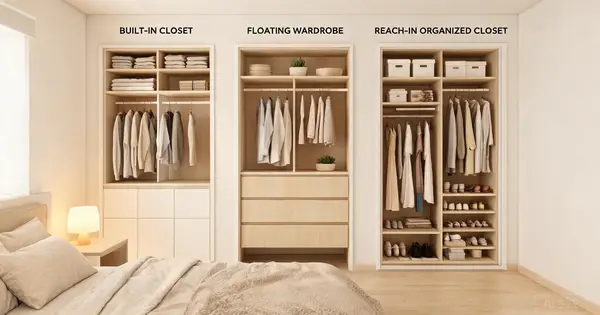
9 Closet Designs Compared: Best for Small Spaces 2026
From floor-to-ceiling built-ins to floating wardrobes — compare 9 small closet designs for 2026. Find the perfect space-saving solution for your apartment.
Low-Maintenance Storage: 5 Designs for a Cleaner Small Apartment
Storage should save space AND save your time. Explore 5 low-maintenance storage designs that keep your small apartment cleaner with less daily effort.

Multi-Purpose Balcony: Laundry, Cleaning, Pets & Plants in One
Your balcony can be more than a drying rack. Design one zone that holds a washer-dryer, cleaning tools, pet supplies, and plants without them fighting.