Murphy Bed FAQ: 10 Things to Know Before Buying One
What is a murphy bed? Are they safe? Get answers to 10 common murphy bed questions — pros and cons, installation requirements, costs, and how to choose...
I researched murphy beds for three months before I bought mine — read every article, watched every video, asked every question I could think of. So I get it: you probably have a ton of questions right now.
Let me save you some time. Here are the 10 most important things to know before you buy.
1. What Is a Murphy Bed, Exactly?
A murphy bed (also called a wall bed or pull-down bed) folds up against the wall when you're not using it. It stores vertically inside a cabinet, so during the day it looks like a bookshelf, a desk, or just clean cabinetry.
The name comes from William Lawrence Murphy, who invented the modern version in the early 1900s because he lived in a tiny San Francisco apartment and wanted to entertain women in a "respectable" parlor room instead of his bedroom. Wild origin story, right?
How it works: The bed frame attaches to the cabinet with a pivot hinge system. Heavy-duty springs or gas pistons do most of the lifting — you're not hoisting the full weight yourself.
2. Murphy Bed Pros and Cons — The Honest Version
Let's not sugarcoat it. Murphy beds are game-changing for small spaces, but they're not for everyone.
Pros:
- Frees up floor space: A standard bed eats 30-40 square feet. A murphy bed takes up zero during the day.
- Makes your apartment feel bigger: Visible floor space tricks your brain into thinking the room is twice as large.
- Multi-functional: Many have built-in desks, bookshelves, or storage drawers.
- More comfortable than a sofa bed: Sofa beds are notoriously bad. Murphy beds use real mattresses.
Cons:
- Upfront cost: Quality units run $800-$3,000.
- Installation work: It's not IKEA-level easy. Plan 4-8 hours or pay for installation.
- You have to make the bed daily: Can't fold it up if it's messy.
- Not for frequent movers: It's mounted to the wall. Taking it down and reinstalling is a hassle.
3. Who Should (and Shouldn't) Get One?
Get one if:
- You live in a studio or 1-bed under 600 sq ft
- You work from home and need desk space
- You have guests often but no spare bedroom
- Your bedroom feels like it's 80% bed, 20% everything else
Skip it if:
- You move every year (installation isn't worth it)
- You hate making your bed
- You have a large bedroom with space to spare
- You're not handy and refuse to pay for installation
- Your landlord won't let you drill into walls
4. How Much Does a Murphy Bed Cost?
It depends on how fancy you go:
Budget ($300-$800): DIY hardware kit plus your own lumber. Basic mechanism, no frills. You do all the work.
Mid-range ($800-$1,800): Pre-built cabinet with mechanism. Usually includes a desk or shelves. You assemble it (or pay extra for assembly).
Premium ($1,800-$4,000+): Solid wood, built-in storage, lighting, custom finishes. Professional installation often included.
Additional costs to budget for:
- Assembly/installation: $200-$500
- Mattress: $200-$800
- Tools you might need: $50-$100
- Wall repairs when you move: $50-$150
5. Can You Install One in a Rental Apartment?
Probably yes — but talk to your landlord first.
How to get approval:
- Be upfront. Don't sneak it in. Most landlords prefer knowing what you're doing.
- Offer to leave it. A murphy bed is an apartment upgrade. Many landlords will say yes if you offer to leave it when you move.
- Promise wall repairs. Say you'll patch holes and repaint. Offer to put it in writing.
- Get approval in writing. An email or text works — just have a paper trail.
The only tricky scenario: really thin walls (plaster and lath). You might need a plywood backing board to distribute weight, which means more holes to patch later.
6. Are Murphy Beds Safe?
This was my biggest worry. "What if it falls on me at 3am?"
The good news: Modern murphy beds are very safe — when installed correctly and used properly.
Safety features to look for:
- Dual-piston or dual-spring mechanism: Redundant systems mean if one fails, the other holds it.
- Locking mechanism: Keeps the bed securely up when stored.
- Soft-close hinges: Prevents slamming.
- Safety straps: Hold the mattress in place when folded.
- Weight rating: Look for at least 250-300 lbs (more for couples).
Safety rules to follow:
- No unsupervised kid operation
- Don't stand under it while folding
- Install into studs, not just drywall
- Stay under the weight limit
- Check bolts every 6 months
7. What Kind of Mattress Do You Need?
You can't just use any mattress. Here's what works:
Thickness: 8-12 inches. Thicker won't fold right. Thinner is uncomfortable.
Flexibility: It needs to bend slightly when stored vertically. Memory foam, latex, and hybrids work well. Super-firm innerspring might be too rigid.
Weight: Check the manufacturer's spec — usually 60-100 lbs for the mattress.
Murphy-bed-specific: Some mattresses are made for wall beds, with Velcro or straps to keep them from sliding.
What not to use: Pillow-top mattresses (too thick), waterbeds, air mattresses.
8. How Long Does Installation Take?
Longer than you think, the first time.
DIY timeline:
- Unboxing + reading instructions: 30 min
- Building the cabinet frame: 1-2 hours
- Installing the mechanism: 1-2 hours
- Mounting to the wall: 30-60 min
- Attaching desk/shelves: 30-60 min
- Adjusting and testing: 30 min
- Total: 4-7 hours
Professional installation: 2-4 hours, $200-$500. Worth it if you value your time or aren't handy.
Pro tip: Have a second person help. Lifting the frame onto the wall mount is a two-person job.
9. How Do You Maintain a Murphy Bed?
Pretty low-maintenance, but don't ignore it completely.
Every month: Wipe down the mechanism (dry cloth only — no lubricant needed), check bolts are tight, test the lock.
Every 6 months: Inspect pistons/springs for wear, check wall mounting, re-tighten everything (wood shifts with temperature).
Red flags to watch for: Squeaking or grinding (loose bolts), bed won't stay up (mechanism needs adjusting), visible frame damage.
10. How Do I Choose the Right One?
Simple four-step framework:
Step 1: Measure your space
- Wall width (min 60" for full, 66" for queen)
- Ceiling height (min 84" for vertical)
- Projection when down (usually 80-90")
Step 2: Pick the features you need
- Just a bed? Go basic.
- Need workspace? Get the desk version.
- Need storage? Look for side cabinets.
- Low ceilings? Go horizontal.
Step 3: Set your budget
- Under $500: DIY kit
- $800-$1,500: Mid-range pre-built
- $1,500+: Premium options
Step 4: Read reviews
Look for assembly difficulty stories, durability reports (1+ year in), and customer service quality.
Final Thoughts
Here's the real talk: everyone I know who has a murphy bed says it's the best thing they've done for their small apartment. But it's a trade-off.
You trade upfront cost and installation time for way more usable space during the day. For most people in small apartments, that's a no-brainer.
If you're on the fence: measure your wall, set a budget, and just go for it. The worst case is you install it and don't love it — but I've literally never heard of that happening.
People don't regret getting a murphy bed. They regret waiting so long.
Related Articles
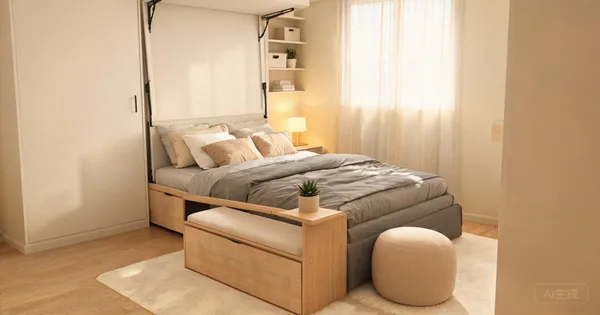
Multi-Functional Furniture: 10 Space-Saving Picks for 2026
Every piece should earn its square footage. Review 10 multi-functional furniture picks—from storage ottomans to murphy beds—that save space and add storage.
5 Best Foldable Storage Shelves 2026: Tested for Small Apartments
Foldable storage shelves are 2026's hottest small apartment essential. I tested 5 top models for durability, capacity, fold mechanism, and real-world use. Find the perfect one for your space.
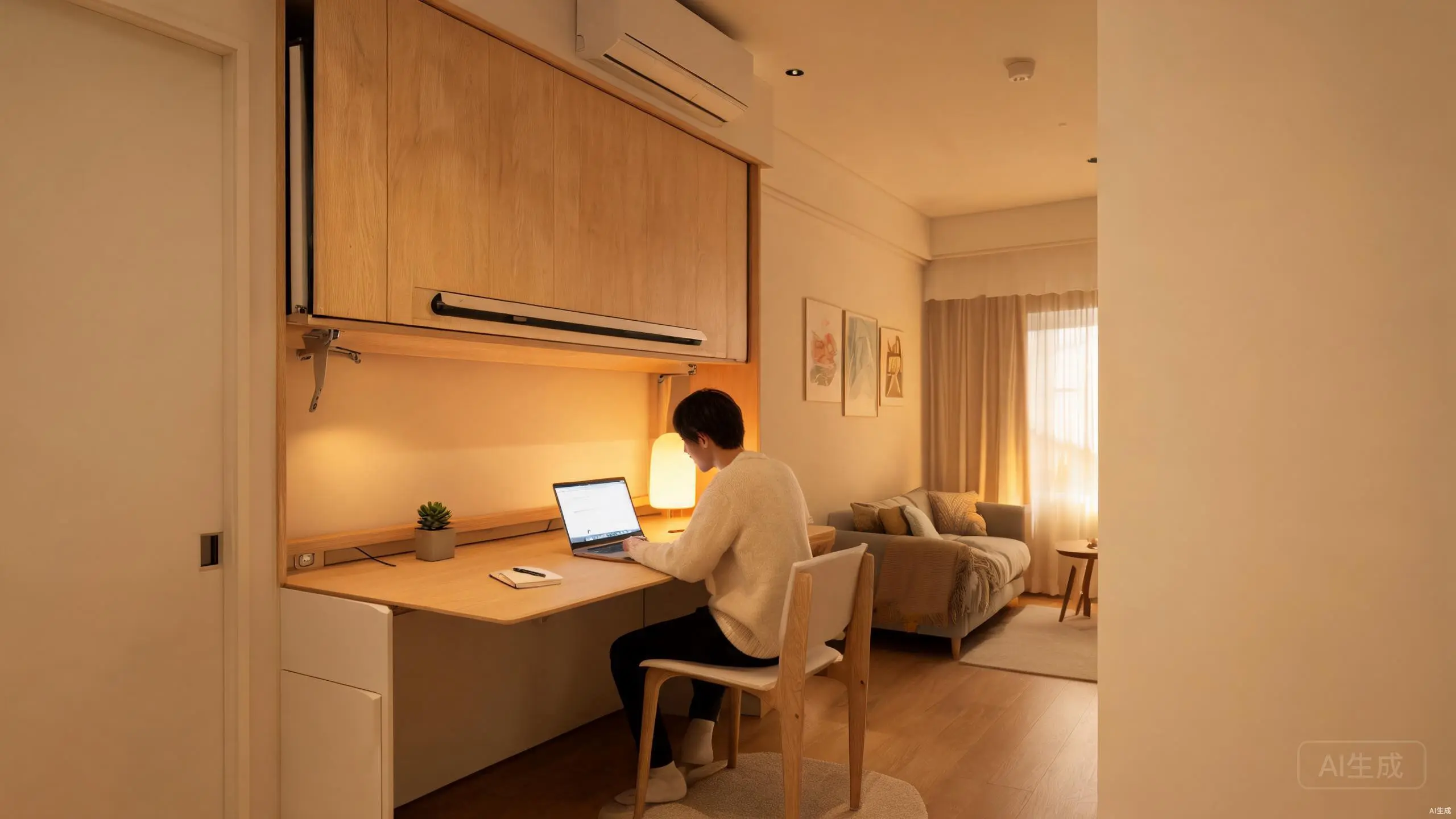
Murphy Bed with Desk: My 3-Month Test in a Small Apartment
I tested a murphy bed with desk in my 35 sq m apartment for 3 months. Here's what works, what doesn't, and which models are worth the money.

Smart Storage Systems 2026 Tested: Worth the Money or Gimmick?
I tested 5 smart storage systems for small apartments in 2026. From motorized shelves to app-controlled closets, here's what actually works and what's a waste of money.
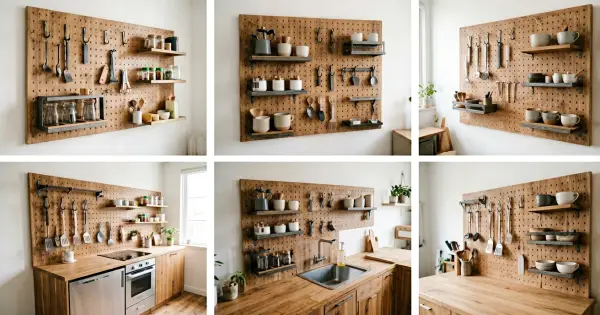
Pegboard Beyond the Kitchen: 6 Room-by-Room Setups
I tested pegboard setups in 6 rooms of my 35sqm apartment, from bathroom to entryway. Here's what works, what doesn't, and the exact hardware you need for each space.
35cm Shallow Wardrobe: Why Narrower Beats Wider in 2026
35cm shallow wardrobes outperform 60cm standards in tight apartments. I tested 7 narrow wardrobes over 3 months—here is what fits, what breaks, and which to buy in 2026.